Care for kitchen knives by hand-washing them promptly, drying them carefully and storing them with the edges protected. Use a suitable cutting board and the maintenance method recommended for the blade. Honing and sharpening are separate tasks, and neither should be guessed from a generic angle.
A good routine is mostly about small habits. A knife left in a sink can be hidden from the next person. A clean knife thrown loose into a drawer can be damaged or cause a cut. Preventing those situations matters as much as buying sharpening equipment.
This guide covers everyday household knife care. Specialty Japanese knives, carbon steel blades, ceramic knives and unusual handles can require different instructions. Check the maker’s advice before applying oil, a honing rod or an abrasive sharpening system.
Know the knife you own
Identify the blade material, edge style and handle. Stainless steel is not the same as stain-proof, and a wooden handle may have different care needs from a molded synthetic one.
Look for chips, a loose handle, cracks or a bent tip. Set a damaged knife aside for assessment. Do not attempt to straighten a blade by hand or continue using a handle that moves.
Keep the manufacturer’s care information with your kitchen records. Knowing the exact model is useful when choosing a compatible sharpener or arranging professional service.
Prepare a safe washing area
Clear the sink of other dishes. Put a stable drying towel on the counter and make sure you have enough room to hold the knife without reaching around another person.
Use mild dish soap, a soft sponge and clean water. Do not place a sharp knife into cloudy dishwater to soak while you wash other items.
Tell anyone sharing the kitchen that you are handling a knife. Avoid cleaning when distracted or when children can reach the work area.
Step-by-step care after use
1. Put the knife down visibly
Place it on a stable surface with the edge safely positioned away from the counter edge. Do not leave it beneath a towel or pile of vegetable scraps.
If you are switching between raw and ready-to-eat foods, clean the knife and relevant surfaces appropriately before continuing. Wiping visible food away is not a complete hygiene routine.
Do not carry a knife loosely with other utensils. Move it deliberately and keep control of the handle.
2. Wash by hand
Follow the maker’s hand-washing guidance with mild soap and a soft cleaning tool. Keep the blade visible throughout the task.
Clean in a controlled direction that does not draw your fingers across the edge. Do not wrap a sponge around the blade and squeeze it while sliding toward the sharp side.
Clean the junction between blade and handle without forcing water into a damaged gap. If food repeatedly collects in a crack or loose fitting, the knife may need repair or replacement.
3. Rinse carefully
Rinse away soap while maintaining a secure grip. Keep the point away from people and avoid letting the knife strike the faucet or sink.
Do not test cleanliness by running a finger along the edge. Inspect under good light instead.
If sticky food remains, repeat washing gently. A sharp blade should not become a scraping tool for its own cleaning.
4. Dry immediately
Use a clean towel and a method that keeps fingers away from the cutting edge. Dry both sides, the spine and the handle.
Do not leave the knife balanced against the sink to air-dry where it can slip. Do not stack it beneath a wet pan.
Follow any material-specific oiling instructions for carbon steel or wooden handles. Use only an appropriate product if the maker calls for it; household cooking oil is not a universal knife-care treatment.
5. Return it to protected storage
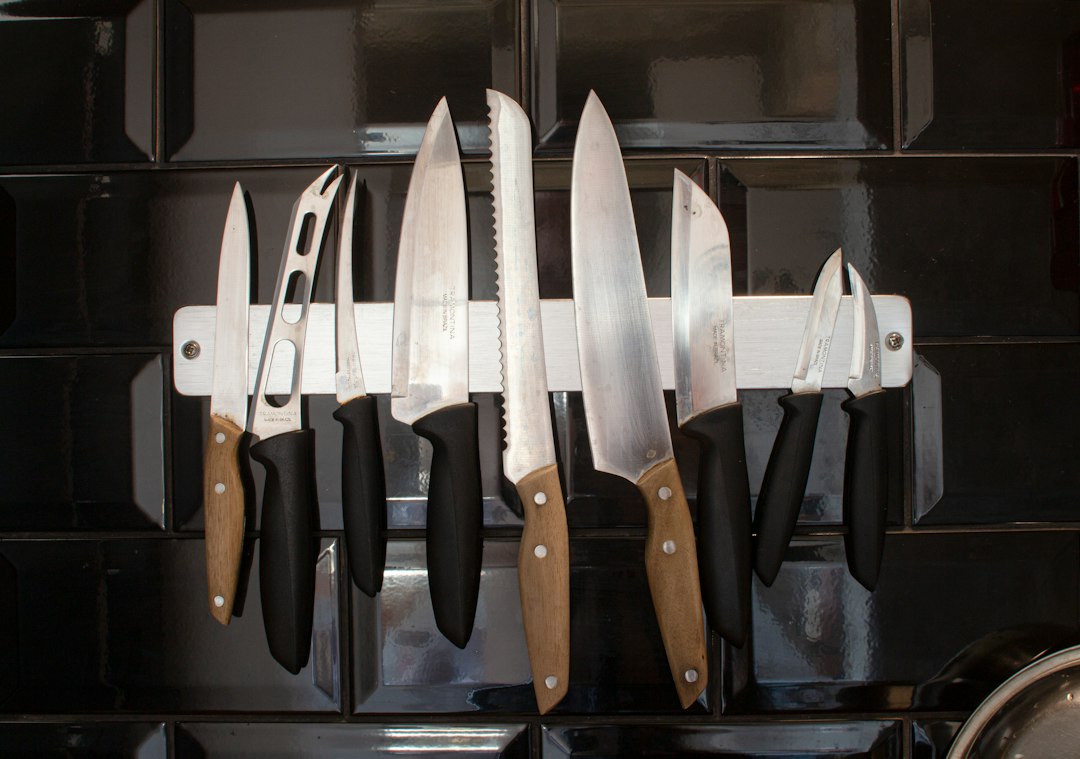
Choose a storage method that keeps the edge from loose contact and prevents accidental grabbing. Options include a suitable drawer insert, blade guard, block or securely installed magnetic holder.
The knife must be dry before entering a guard or block. Clean storage accessories according to their own instructions.
If using a magnetic strip, follow its installation and placement guidance. Keep it out of children’s reach and confirm that each knife is held securely rather than barely attached.
Use the cutting board as part of knife care
A stable suitable board protects control during cutting and avoids unnecessary edge wear. Use the board type recommended by the knife maker.
Prevent sliding with an appropriate nonslip arrangement. A board that rocks or moves is a problem even if the blade is perfectly maintained.
Do not use the knife to open cans, pry lids or break apart frozen food unless it is specifically designed for that purpose. An ordinary chef’s knife is not a general workshop tool.
When moving chopped food, use a suitable scraper rather than dragging the cutting edge sideways across the board.
Honing versus sharpening
Honing and sharpening are not interchangeable labels. Depending on the system, honing can help maintain an edge, while sharpening removes material to restore cutting geometry.
The right method depends on the blade and the tool. Do not apply a honing rod to every knife, especially a specialty or brittle blade, without guidance.
Use the angles and procedure specified by the knife or sharpening-system manufacturer. If you are uncertain, professional sharpening can be safer than experimenting on a valued knife.
A maintenance schedule should reflect use and performance. There is no need to grind away metal simply because a calendar reminder appeared.
Recognize when the knife needs attention
A knife that slips, requires excessive force or crushes food may need maintenance, but technique and food conditions also matter. Assess it on ordinary tasks rather than testing the edge on a finger.
Stop if you see a chip, loose handle or bent blade. Do not try to fix substantial damage with a few hurried passes through a pull-through sharpener.
If the knife never cuts well after sharpening, review compatibility and technique with a professional. Repeating an unsuitable method can remove material without solving the problem.
Troubleshooting marks and rust
First wash and dry the knife using its approved method. If a mark remains, identify the blade material and ask the maker which treatment is safe.
Do not assume every color change is rust. Some carbon steel knives develop patina, while other marks may be residue or corrosion.
Avoid abrasive cleaners, metal polish and acid soaks unless specifically approved for that blade and handle. A cosmetic restoration can damage markings, coatings or edge geometry.
Persistent corrosion or a damaged food-contact surface deserves professional assessment. Do not continue scrubbing simply to make the blade brighter.
Build a routine for a shared kitchen
Choose one visible place for a knife that is waiting to be washed, keeping it separate from ordinary dish piles. Better still, clean and store it promptly when the task is complete.
Agree that knives do not go into the dishwasher or communal soaking water unless the exact care instructions and safe household routine permit it. For most quality kitchen knives, hand washing is the practical default.
Make storage positions obvious. An empty slot helps someone notice that a knife is still on the counter, while a loose drawer hides both clean and dirty blades.
Common mistakes
Do not soak knives in a sink. Do not put a wet knife into a closed guard. Do not choose a sharpener solely because its packaging says universal.
Avoid holding a knife by the blade while cleaning the handle. Also avoid leaving a drying knife where a towel can hide it.
Do not confuse aggressive sharpening with good maintenance. Correct daily care, suitable cutting surfaces and protected storage reduce avoidable damage between sharpening sessions.
Prepare for professional maintenance
If you arrange sharpening or repair, identify the knife model and explain any chips, corrosion or previous treatment. Ask how the service handles that blade type before handing it over.
Transport the knife with an appropriate edge guard and secure packaging. Do not put a loose sharp knife in an ordinary shopping bag.
After service, review the recommended care routine and storage method. A newly sharpened edge still needs the same careful washing and protected storage as before. If a provider suggests a maintenance tool, confirm that it is suitable for your particular knife rather than treating it as universal.
Frequently asked questions
Can stainless steel knives rust?
They can develop corrosion under unsuitable conditions. Wash, dry and store them according to the maker’s instructions.
Is a magnetic holder safe?
It can be suitable when designed, installed and positioned correctly. Confirm secure holding and safe access, especially around children.
Should every knife be honed?
No. Blade material and design matter. Follow the knife manufacturer’s guidance.
Can I sharpen a serrated knife like a chef’s knife?
Not automatically. Serrations require a compatible method or professional service.
What is the simplest improvement?
Wash the knife visibly and carefully, dry it promptly and return it to protected storage after each use.
Related guides
Sources
Illustrative photo: Danilo Rios / Unsplash. The photograph illustrates the topic; it is not a step-by-step demonstration.
Editorial note
Kitchen products and manufacturer instructions vary. When a product manual conflicts with general guidance, follow the instructions for your exact model.