Hard-boiled eggs can be kept in the refrigerator for up to one week after cooking, whether peeled or still in their shells. Refrigerate promptly at 40°F (about 4°C) or below. That week assumes safe handling and continuous refrigeration; it does not override excessive time at room temperature.
The cooking date starts the clock. Peeling an egg later or moving it into a new container does not restart the storage period.
The main decisions at a glance
| Situation | What to do |
|---|---|
| Cooked today and promptly refrigerated | Label the cooking date and use within one week |
| Peeled after several days in the fridge | Keep the original cooking date |
| Left unrefrigerated for more than two hours | Discard |
| Left out for more than one hour above 90°F (about 32°C) | Discard |
| Cooking date or storage history unknown | Do not assume a fresh seven-day window |
FDA guidance supplies the one-week limit for peeled and unpeeled eggs and the shorter limit in hot conditions. These are maximum handling limits, not targets for leaving food on a counter.
Store a batch so the date stays visible
Use a clean covered container, put the cooking date where it can be read, and keep the eggs in the refrigerated compartment. Health Canada recommends a sealed container for hard-boiled eggs and prompt refrigeration in the colder body of the refrigerator.
Keep different cooking batches separate or clearly marked. If several people prepare food in your kitchen, write “cooked” beside the date so nobody mistakes it for the purchase date or peeling date.
For a practical batch plan, count how many eggs you expect to use before cooking. Smaller batches may be easier to finish within the recommended time than a large container whose oldest eggs become difficult to identify.
Peeling changes convenience, not the deadline
FDA guidance applies the same one-week maximum to eggs in the shell and peeled eggs. Choose the format that fits your meals, keep handling clean, and return the container to refrigeration promptly.
When taking out a portion, leave the rest refrigerated. Our guide to separating raw food from ready-to-eat food in the fridge can help you give cooked eggs a clear place away from raw-food drips.
Egg salad has a different limit
Do not apply the plain hard-boiled egg rule to every dish containing eggs. FoodSafety.gov lists egg salad at three to four days in the refrigerator and advises against freezing hard-cooked eggs. FDA also lists a three-to-four-day refrigerated limit for leftover cooked egg dishes.
Combining an older cooked egg with fresh ingredients does not give that egg a new week. Keep track of the original cooking date and follow the shorter applicable limit. See our leftover storage guide for other cooked foods.
Taking eggs to work or on a picnic
Use an insulated cooler or lunch bag with enough frozen packs to keep the eggs cold. Keep the bag closed and away from heat. The FDA recommends ice or frozen gel packs for transporting cooked eggs.
Before packing, decide where the food will stay until lunch. If there is no reliable way to maintain refrigeration, choose a different lunch rather than treating the one-week fridge limit as permission for a warm day in a bag.
When to throw them away
Discard eggs that exceed the applicable time limit, have visible spoilage, or have an uncertain history that prevents a safe decision. Do not taste an egg to test safety. The FDA notes that harmful bacteria may be present without obvious changes in appearance or smell.
A label is useful only when the food has also been handled safely. Record the cooking date, keep the eggs cold, and make a fresh batch when the history is unclear.
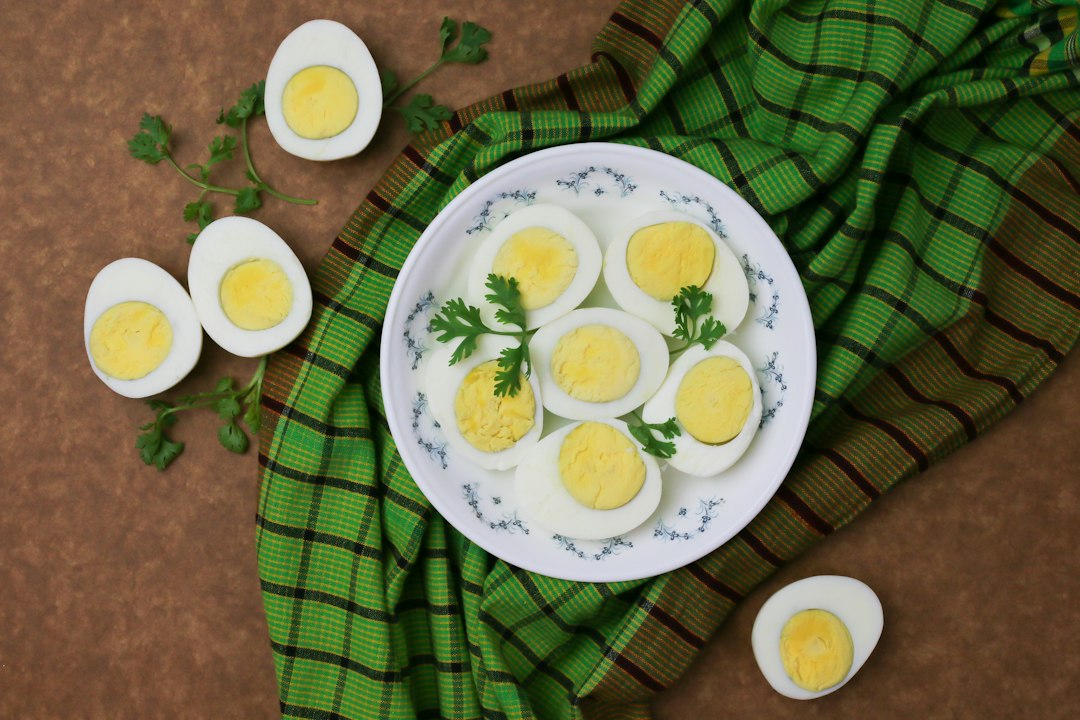
Featured image: Photo by Tamanna Rumee on Unsplash. Illustrative photograph.
Food safety references
- FDA: egg storage, serving, and transport
- FoodSafety.gov: cold food storage chart
- Health Canada: egg safety and sealed storage
- FDA: why appearance and smell cannot establish safety
Editorial note
Kitchen products and manufacturer instructions vary. When a product manual conflicts with general guidance, follow the instructions for your exact model.