Clean a seasoned carbon steel pan by letting it cool, hand-washing with warm water and a little mild dish soap, drying it completely, and wiping on a very thin layer of cooking oil. Avoid soaking and the dishwasher. The aim is a clean, smooth cooking surface without leaving bare steel wet.
This routine is for seasoned carbon steel, not stainless steel or a pan with a synthetic nonstick coating. New pans may have a protective factory coating that needs a separate first-use procedure; follow the maker’s instructions before cooking.
Start with the pan’s condition
Ask what actually needs attention. Ordinary grease and food residue need routine washing. A stubborn food patch may need loosening. Orange rust, loose flaking material, or a sticky oil coating calls for the manufacturer’s restoration or seasoning guidance.
Do not treat every change in color as a reason to strip the whole pan. If you are unsure what you are seeing, compare it with the maker’s care photographs or send support a picture.
Wash without soaking
Let the pan cool to a safe handling temperature before washing. Use warm water, mild dish soap, and a soft sponge or suitable brush. Rinse after removing food. Lodge explicitly permits warm soapy water for its seasoned carbon steel; de Buyer also permits a small amount of gentle soap.
Do not leave the pan in a sink of water while you clean other dishes. Machine washing can remove seasoning and encourage rust. For everyday cleaning, avoid aggressive scouring and harsh detergents that unnecessarily remove the finish.
If food remains stuck
Use a pan-safe scraper or nylon brush before increasing force. Lodge also describes a brief water simmer to release stuck food. If your pan’s instructions allow that method, use the stove normally, stay with the pan, and avoid letting the water boil away. Let it cool safely before handling and continue with washing and drying.
A scraper should lift food rather than carve lines into the surface. If you find yourself pressing hard without progress, stop and consult the maker instead of switching to a more destructive tool.
Dry promptly, including the outside
Wipe with a dry towel after rinsing. Check the underside and the area around handle attachments as well as the cooking surface. De Buyer advises immediate drying and says brief heating can help finish the job. If you use heat, follow the pan’s instructions, stay nearby, and turn the burner off as soon as the pan is dry.
Choose a dry resting place before starting. That prevents a cleaned pan from going back onto a wet draining board while you look for storage space.
Oil lightly and put away
When safe to handle, wipe on a thin film of suitable cooking oil and remove visible excess. Lodge recommends a very thin layer after washing; de Buyer particularly recommends light oiling for infrequent use or humid storage.
Keep the pan in a dry place. If space is tight, use our pots, pans, and lids organization guide to arrange access without awkward heavy stacks.
Know when routine cleaning ends
If rust or a damaged seasoning layer remains, use a restoration procedure written for your exact pan. Do not assume that an oven method or temperature for another brand is safe for your handle. Before attempting restoration, record the model and check its heating restrictions.
For stainless steel cookware, follow our separate guide to removing burnt food from a stainless steel pan; the care routines are different.
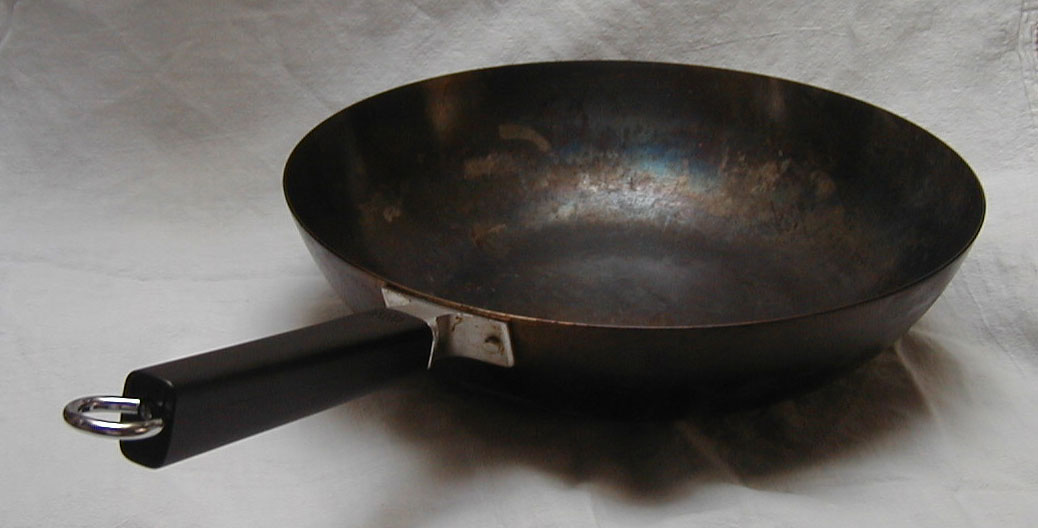
Featured image: Seasoned carbon steel wok by FiveRings, via Wikimedia Commons, licensed under CC BY-SA 1.0. No editorial alterations; display sizes may vary.
Manufacturer references
- Lodge: carbon steel cleaning and care
- De Buyer: steel pan maintenance
- De Buyer USA: washing carbon steel
Editorial note
Kitchen products and manufacturer instructions vary. When a product manual conflicts with general guidance, follow the instructions for your exact model.