Label a pantry container with the exact food name and enough information to trace it back to its original package. Record when you opened or transferred it, keep the package’s date wording, and retain the ingredients, allergen information, and storage instructions. A decorative name alone is not a complete system.
The method below is a household organization suggestion for ordinary dry pantry foods. It is not a commercial labeling standard or a substitute for the manufacturer’s directions.
Decide what needs a container
Start with one shelf and choose foods you actually use. If the original package is easy to close and fits well, keeping it may be simpler than decanting. For foods with important preparation or storage directions, keeping the package inside a larger storage bin can preserve information without copying it.
Do not let a container’s appearance decide where a food belongs. A product labeled for refrigeration still needs refrigeration. Infant formula and foods with specialized preparation requirements are outside this general pantry system; keep and follow their original instructions.
Use a short front label and a detailed record
The front label should make the item easy to identify during cooking. Put less frequently needed information on a second label, a retained package panel, or a clearly indexed photograph.
| Information | Suggested location |
|---|---|
| Exact food name, including type | Front of container |
| Date opened or transferred | Front or side label |
| Original printed date and wording | Side label or package record |
| Brand, lot code, ingredients, and allergen statements | Retained packaging or readable photo |
| Preparation and storage directions | Package record kept close enough to use |
For example, “whole-wheat flour” is more useful than “flour” when several types are stored together. A brief front label can point to a matching package photograph rather than trying to fit every detail into tiny handwriting.
A worked label example
This is an invented organization example, not a storage-life recommendation:
WHOLE-WHEAT FLOUR
Opened: October 21, 2026
Package record: Flour A
Original date: copy exact wording and date
Storage: follow original package
Photograph the relevant package panels before discarding the wrapper. Use the same record name on the container and photograph. Check that the text is readable and that the lot code is included even if it is printed on another seam or panel.
Keep allergen information intact
The FDA advises people with food allergies to read food labels. Ingredient-based “Contains” statements and voluntary “May contain” statements mean different things; do not replace them with a guessed shorthand. Keeping a full readable label is more dependable than copying only the largest allergen notice.
The FDA also uses product identifiers such as lot numbers and label photographs when investigating reports. Preserving these details can help identify which product you actually transferred. A familiar-looking ingredient in an unmarked jar is not enough information for someone managing an allergy.
Refill without losing track
As an organization rule, finish one batch before adding another. Keep the next unopened package separately until the container is ready. That makes it easier to associate one label record with one batch instead of deciding which date belongs to a mixture.
Before refilling, follow the container maker’s cleaning instructions and let it dry fully. Update the label and package record together. If a label no longer matches the contents, fix it immediately rather than relying on memory.
Make the system easy to maintain
Choose a label position you can read from the shelf. Use a consistent date format, keep a pen nearby, and test the system on a few containers before buying a matching set. At the next grocery unpacking, check whether another person can identify each food and find its instructions without your help.
For shelf layout, see our baking supplies organization guide. For ingredient-specific conditions, use our guide to storing flour. A transfer date records an action; it does not create a new shelf life.
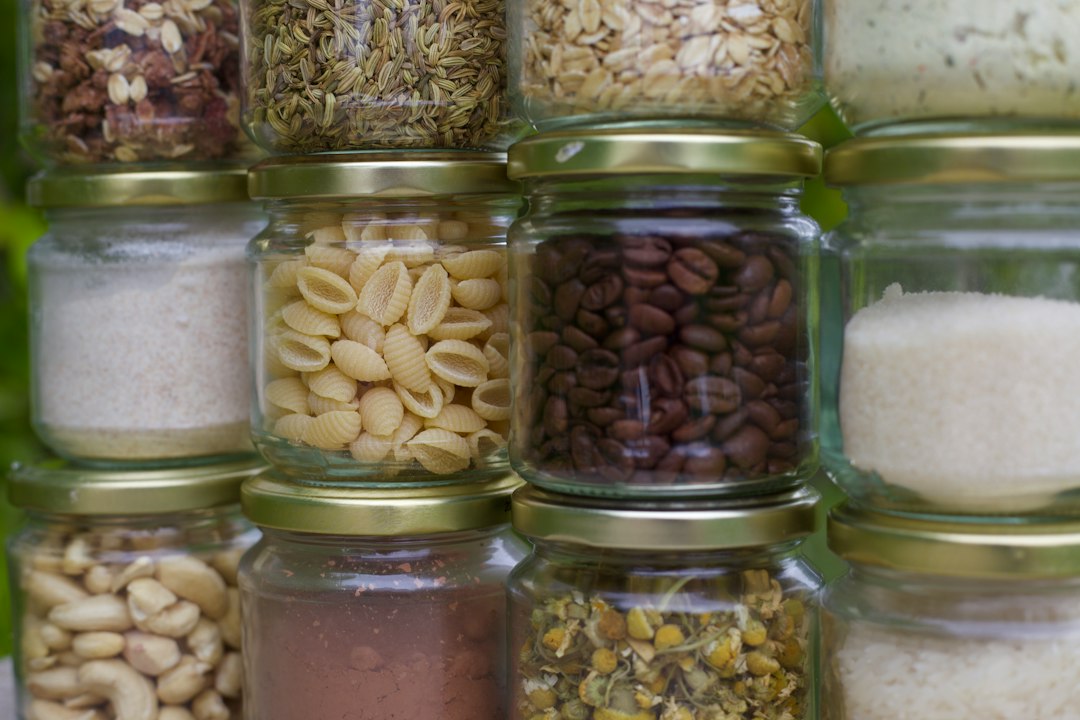
Featured image: Photo by Jas Min on Unsplash. Illustrative photograph.
References
Editorial note
Kitchen products and manufacturer instructions vary. When a product manual conflicts with general guidance, follow the instructions for your exact model.