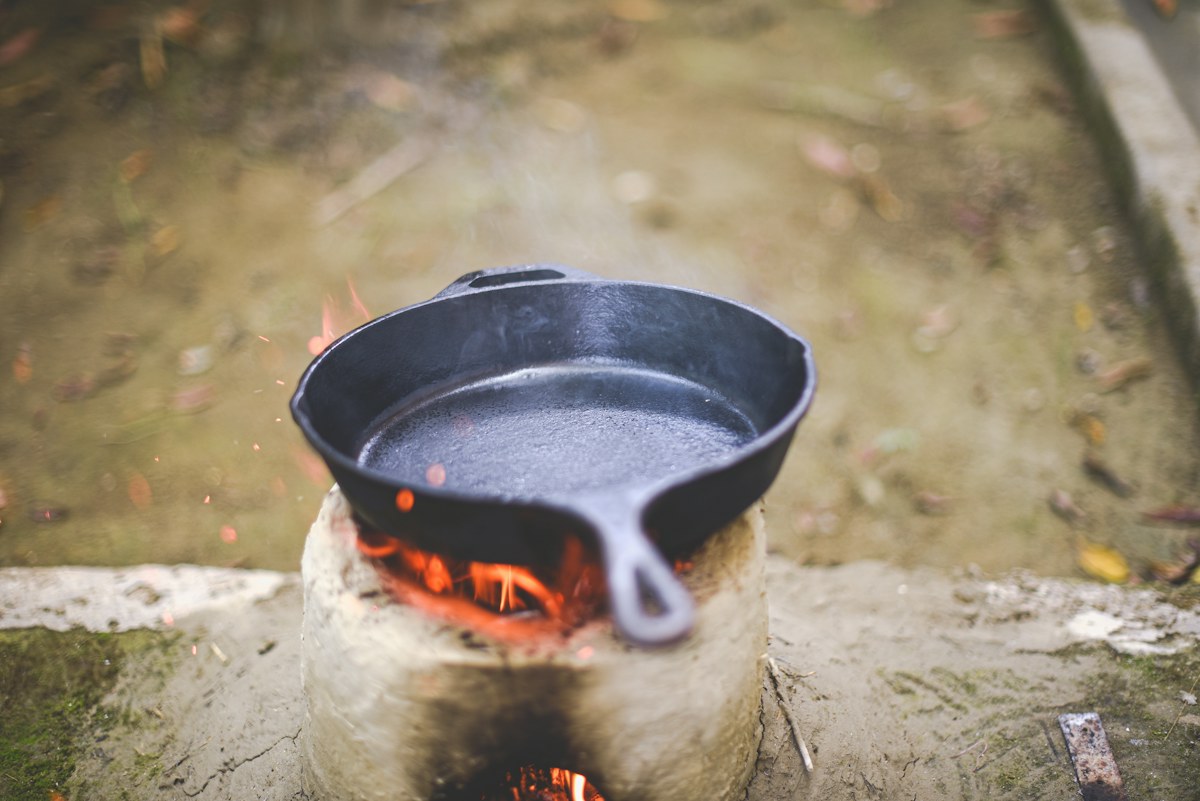
Yes. Lodge says modern dish soap can be used to clean seasoned cast iron. Its basic routine is to wash the pan, dry it completely, and apply a thin layer of oil. The bigger everyday mistake is leaving the pan wet rather than using soap.
This answer concerns ordinary seasoned cast iron, including Lodge skillets. Enameled cookware has a different surface and care instructions. Identify which pan you own before choosing tools or following restoration advice.
Why soap does not automatically mean ruined seasoning
Lodge describes seasoning as oil baked onto the cookware, producing an easy-release surface. It is different from food residue left after a meal. Keeping yesterday’s cooking debris in a skillet is not the same thing as maintaining its seasoning.
The useful question is therefore not just “Did I use soap?” Ask whether the pan is clean, completely dry, and appropriately cared for afterward. If its surface has changed, inspect the change instead of assuming a single wash destroyed it.
How to wash a seasoned cast iron skillet
- Wash. Use warm, soapy water and a suitable brush or scrubbing pad, following your cookware’s instructions.
- Dry fully. Lodge recommends a paper towel or lint-free cloth. Do not leave the skillet in the sink or rely on air drying.
- Oil lightly. Distribute a thin layer of cooking oil over the surface with a paper towel. This is a light maintenance step, not an instruction to leave a puddle of oil in the pan.
Routine cleaning is different from restoration
| Situation | Which approach fits? |
|---|---|
| Normal food residue after cooking | The everyday wash, dry, and oil routine |
| Visible rust | The manufacturer’s rust-removal guidance |
| Sticky or flaking seasoning | The manufacturer’s seasoning troubleshooting |
| A coated enamel surface | Enameled cookware care, not bare-iron restoration |
Lodge allows steel wool for rust removal but does not recommend it for everyday cleanup. That distinction matters: a tool used in a restoration procedure is not necessarily the right tool for every wash. Likewise, oven reseasoning is a separate process, not an obligatory finish to each dinner.
What to avoid
Do not soak seasoned cast iron, put it in the dishwasher, or store it damp. Lodge identifies prolonged moisture, dishwashing, and air drying as situations that can lead to rust. If rust appears, consult its restoration instructions rather than covering the affected area with oil and treating the problem as solved.
Make the routine practical
Keep a suitable brush and drying cloth accessible where you wash cookware. Before returning the pan to its usual place, check that you completed all three steps. If you share a kitchen, explain the routine to the other person using the pan so it does not accidentally join the dishwasher load.
Choosing a new pan? Our frying-pan buying guide can help you compare cookware options.
Before washing: identify the kind of cast iron
Check the product description or manual instead of relying only on its color. Seasoned cast iron and enameled cast iron are different surfaces. Some enameled pans have a dark interior, so a black cooking surface is not sufficient proof that a pan is bare, seasoned iron.
This matters most when advice involves scraping, rust removal, or oven seasoning. Le Creuset recommends soft natural or nylon tools for its enamel and warns that metal sponges and abrasive cleaners can scratch it. Do not apply a bare-iron restoration method to an enamel coating.
Set up the washing area
Gather a suitable brush, mild dish soap, a drying cloth, cooking oil, and a paper towel before carrying the pan to the sink. Keep the work area clear so you can handle a heavy skillet without balancing it on other dishes. If the cookware has removable or special components, consult their instructions too.
Do not begin while the pan is too hot to handle safely. For enameled cookware, Le Creuset specifically instructs owners to cool it to room temperature and avoid introducing cold water into a hot pan because thermal shock can damage the enamel. That is an additional reason not to treat every kind of cast iron identically.
Method 2: Handle food that remains after ordinary washing
Step 1: Distinguish leftover food from a surface problem
Look at what remains after your initial wash. A recognizable piece of food, a sticky film, orange discoloration, and a flaking surface call for different questions. Describe the observation before choosing a stronger tool. “It needs cleaning” is too broad to decide whether scraping or restoration is appropriate.
Step 2: Use an owner-approved tool
Choose a brush or scraper that your cookware manufacturer allows. Follow the product instructions rather than assuming every tool sold for cast iron is appropriate for every coating. Stop if you cannot identify the surface or if the tool’s suitability is unclear.
For a seasoned Lodge pan, its cleaning page is the starting point. For an enameled pan, use the enamel manufacturer’s cleaning procedure. Do not combine steps from both procedures because they happen to mention cast iron.
Step 3: Complete the drying step before deciding what comes next
Inspect the clean, dry pan under good light. If the food is gone and no separate problem remains, finish the routine maintenance. If an unfamiliar mark remains, take a photograph and consult the maker’s troubleshooting advice. This prevents a simple washing task from turning into unnecessary stripping or abrasive polishing.
Method 3: Respond to sticky seasoning
Lodge identifies a sticky, gummy seasoned surface as a possible result of excess oil buildup. It emphasizes applying a very thin, even layer after cleaning; the oil should not run or drip when the skillet is tilted. More oil does not automatically mean better protection.
First review what happened after the last wash. Did you wipe on a light film or leave visible oil collecting in the pan? Does the stickiness remain after cleaning? Record these observations. They help distinguish the maintenance routine from a problem that may require the maker’s oven-seasoning process.
Lodge provides a high-temperature oven procedure for resolving certain seasoning concerns. If you need that procedure, read it in full for your cookware before beginning. Check the suitability of all handles and components, and prepare the oven according to the instructions. This article’s answer about soap is not a substitute for a complete reseasoning guide.
Method 4: Decide what to do about rust
If orange or reddish rust is visible on seasoned iron, move from ordinary cleaning to the manufacturer’s restoration guidance. Lodge permits steel wool during rust removal while discouraging it for normal daily washing. This is a specific restoration exception, not a general recommendation to scour every skillet.
Consider whether the pan was left in water, stored damp, or placed in a dishwasher. Correcting that routine helps avoid repeating the same problem after restoration. If you have an enamel-coated pan with damage or a mark you cannot identify, contact its manufacturer instead of assuming that a bare-iron rust treatment applies.
Do not conceal an unresolved issue with a thick layer of oil and then call the pan restored. Follow the full procedure and its final checks. For a pan with uncertain history, describe its condition and ask the maker what inspection or care is appropriate.
Store the pan in a way that supports the routine
Choose a place where the cookware can be returned after it is completely dry. Keep its cleaning supplies easy to find, and make sure another household member knows that the seasoned skillet should not join an ordinary dishwasher load.
If you stack cookware, follow the manufacturer’s storage guidance for the different surfaces. Think through how each pan is lifted out: a storage arrangement that requires dragging one heavy pan across another can be awkward even when the cupboard looks tidy. A clearly assigned place may be more useful than adding an organizer that does not fit.
Reduce cleanup problems at the next meal
Lodge’s cooking guidance recommends preheating appropriately, using cooking oil, and avoiding excessive heat to reduce sticking. Use your pan’s instructions and the needs of the food rather than copying one heat setting for every meal. When a sticking problem repeats, examine cooking technique as well as washing technique.
Keep a note of the food and heat setting if you are trying to understand a recurring problem. For example, compare whether the residue appears with one particular dish or after every use. This gives you a specific question to investigate without blaming soap for an issue that began during cooking.
Frequently asked questions
Do I need a completely black, perfectly uniform surface?
Lodge says variations in seasoning coverage can be normal and need not affect performance. Evaluate a real concern, such as rust or persistent stickiness, instead of treating every difference in color as damage.
Do I need to oven-season after every wash?
The everyday wash, dry, and oil routine is separate from oven seasoning. Use the maker’s troubleshooting guidance when a surface problem calls for reseasoning; do not turn an occasional restorative procedure into an automatic extra chore.
Can I follow this routine for an enameled Dutch oven?
Follow its enamel care instructions. Le Creuset recommends cooling, washing gently with mild soap and suitable tools, then rinsing and drying. The similarity in washing does not make steel-wool rust removal or bare-iron seasoning appropriate for enamel.
What tells me the routine is complete?
The food residue has been removed, the pan is dry, and any maintenance oil has been applied as directed. You have also separated any unresolved rust, coating damage, or sticky-seasoning concern from the ordinary cleanup task rather than ignoring it.
Sources
- Lodge: Sticky seasoning, flaking, and uneven coverage
- Le Creuset: Enameled cast iron care
- Lodge: Cooking techniques to reduce sticking
- Lodge: How to clean seasoned cast iron and handle rust
- Lodge: Understanding seasoning and cookware care
Editorial note
Kitchen products and manufacturer instructions vary. When a product manual conflicts with general guidance, follow the instructions for your exact model.