A dishwasher can leave white residue because of mineral deposits, detergent residue, or poor rinsing. Cloudy glasses can also have permanent surface damage called etching. Start by identifying what you see before buying a cleaner or changing settings.
The checks below stay within normal user operation. Your model’s manual takes priority for detergent dosage, rinse aid, and cleaning products. Do not remove panels or test electrical parts.
First, describe the problem
Inspect a few cooled items in good light. Note whether the problem affects glass, plates, and cutlery equally or only a particular set of glasses. Keep one example aside so you can compare it with the next load.
| Observation | What it suggests | Next check |
|---|---|---|
| Powder or residue rinses away | A removable deposit rather than proof of etched glass | Detergent condition, dispenser access, and loading |
| Cloudiness improves with a gentle vinegar spot check | Removable film may be involved | Water hardness and model-approved cleaning |
| Glass remains dull or rough | Etching or another persistent film is possible | Glass care instructions and manufacturer advice |
Whirlpool suggests gently rubbing a cloudy area with a little vinegar to help distinguish film from etching. Use this only on plain glass whose care instructions permit it, away from the appliance, then wash and rinse the item. A mark that does not lift is not conclusive proof of etching. Do not use this test on decorated pieces or acid-sensitive materials, and never combine vinegar with bleach or another cleaner.
Check the detergent before adding more
Use automatic dishwasher detergent, not hand dish soap. Check that it has been stored closed and dry. Inspect the dispenser before a cycle: a large plate or utensil should not prevent its lid from opening.
Follow the detergent package and model manual for your water hardness. Excess detergent is not a universal solution; Whirlpool notes that strong detergent chemistry and very soft water can contribute to glass damage. Do not cut open or divide single-dose packs to improvise a smaller dose.
Check rinse aid and water information
Rinse aid helps water drain from surfaces and can reduce spotting. Check the reservoir using your manual and fill only to the specified level. Whirlpool advises against substituting vinegar for rinse aid.
If chalky deposits recur, obtain a water-hardness result from a suitable test or your water supplier. Record the units as well as the number. A result described only as “hard” is less useful when matching the manual’s dosage instructions.
Run a controlled comparison
Use an ordinary load of dishwasher-safe dishes. Keep tall items clear of spray arms and leave access to the detergent dispenser. Our guide to loading a dishwasher properly explains rack placement.
Change one variable that the instructions support, then compare the result. For example, correct a blocked dispenser before switching detergent and adjusting rinse aid at the same time. Record the cycle, detergent, and result so you can tell which change helped.
If the manual recommends an empty cleaning cycle, use its approved product and procedure. Do not combine cleaner, detergent, and household chemicals in an experimental treatment.
When to ask for service
If residue continues after these checks, give support your model number, hardness result, detergent details, and photographs. Stop using the appliance if it leaks, produces a burning smell, or trips a breaker. Heating, wiring, and pump diagnosis belong with qualified service personnel.
If the load is mainly wet rather than coated, follow our separate dishwasher drying checklist.
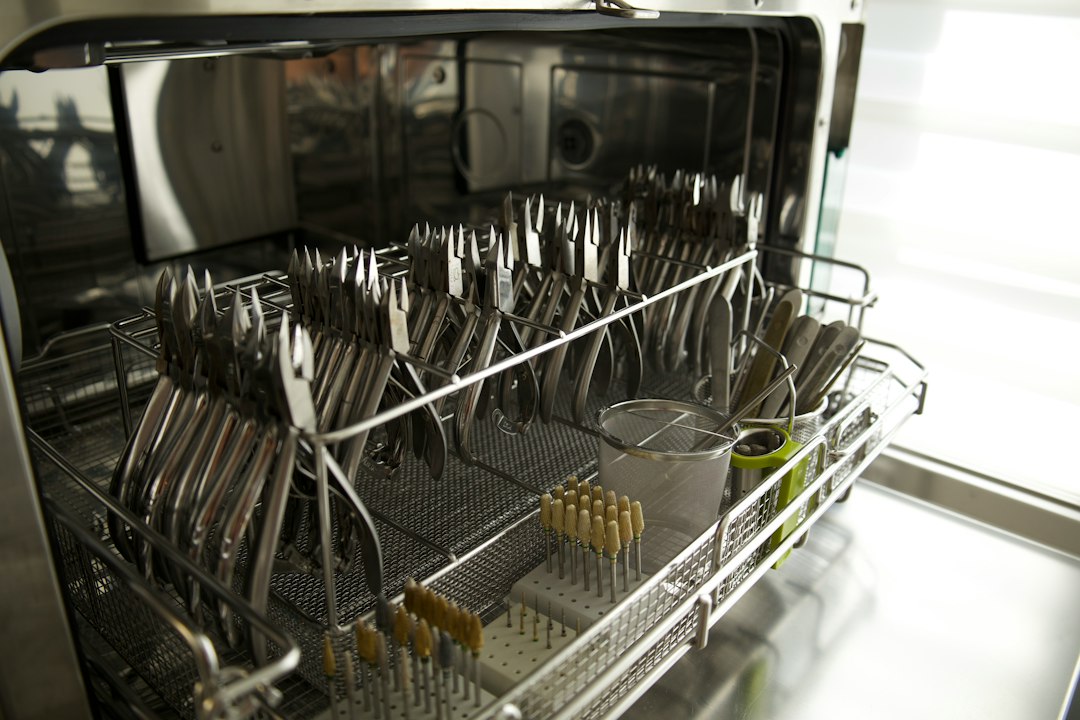
Featured image: Photo by Jean Woloszczyk on Unsplash. Illustrative photograph.
Manufacturer references
- Whirlpool: etching or cloudy glassware
- Whirlpool: white film or residue
- Whirlpool: rinse aid use and precautions
Editorial note
Kitchen products and manufacturer instructions vary. When a product manual conflicts with general guidance, follow the instructions for your exact model.