Wash stainless steel flatware promptly with a suitable mild dish detergent, rinse it well and dry it before storage. Check the care instructions for colored, plated, mixed-material or decorative pieces. Stainless steel resists corrosion, but it can still stain or develop damage when treated poorly.
Confirm that you are cleaning stainless steel
Check the packaging, a manufacturer marking or the product page. Everyday flatware can be stainless steel, silver-plated, solid silver or a mixture of materials. The handle may have a different finish from the eating end. A silver color alone does not identify the metal.
Separate coated or decorative pieces until you know their requirements. Gold-tone, black, painted or resin-handled utensils may need different treatment from plain stainless steel. Do not use a silver-polishing method on the entire collection simply because all the pieces live in the same drawer.
Look at the condition in good light. Note whether the issue is dried food, a water spot, a discolored area or an actual pit. The aim of cleaning is to remove residue while preserving the surface, not to make every old mark disappear through increasingly abrasive treatment.
Remove food promptly and keep knives visible
Clear leftover food from forks and spoons soon after use. Avoid leaving salty or acidic food on the metal for a long time. Lenox’s flatware care guidance recommends prompt washing and warns against prolonged soaking, which can contribute to staining or pitting in some conditions.
Keep table knives and any sharper utensils visible as you prepare the wash. Do not drop a group of knives into an opaque basin and reach around for them. Even a table knife can cause injury when hidden among other items or gripped by the blade.
Separate nested spoons and forks so food is not pressed between them. If a small piece of food has dried in a fork, a gentle wash with a soft brush is preferable to scraping between the tines with another metal utensil. Check decorative handle grooves too.
Hand wash with a soft tool
Use a mild hand dishwashing detergent suitable for the flatware and follow the care instructions. Wash the handle, both faces of the eating end and the transition between them. Choose a soft sponge or brush rather than steel wool or an abrasive pad.
Work in small groups so you can handle each piece securely. For a knife, keep the edge directed away from your fingers and do not pull a cloth along a sharp edge. Rinse each item after washing instead of leaving the entire set in soapy water while you complete other kitchen jobs.
Inspect the result before drying. A greasy feel means the piece needs another wash. A mark remaining after food and detergent are removed may need manufacturer-specific advice. Adding more detergent or rubbing harder will not necessarily resolve mineral deposits or damage to the metal.
Load the dishwasher without tight nesting
First confirm that the exact set is dishwasher-safe. Follow both the flatware maker’s and dishwasher’s loading guidance. Handles, coatings and knife constructions can introduce exceptions even when the basic metal tolerates machine washing.
Arrange spoons and forks so water can reach their surfaces. Avoid placing a tightly nested stack together in one compartment. Position knives safely according to the appliance instructions, and ensure long pieces cannot fall through or obstruct moving parts. Use a dedicated cutlery tray as designed rather than piling utensils across it.
Keep dissimilar metals apart where the maker advises it. Lenox, for example, warns against contact with aluminum and other metal objects during washing. Remove and dry the flatware after the cycle when practical rather than leaving it in a wet closed dishwasher for an extended period.
Distinguish water spots from surface damage
A dried droplet mark is different from an orange speck, a dark stain or a recessed pit. Begin by washing and drying the piece, then examine the area. If the mark is only on the surface, the manufacturer may provide an approved treatment. Follow that guidance rather than assuming all stainless cleaners are suitable for eating utensils.
Avoid bleach, oven cleaner, abrasive powders and general-purpose metal polish unless the product is specifically approved for the flatware and the intended food-contact use. A cleaner that works on a kitchen sink may have different rinsing requirements or be unsuitable for coated handles.
If the metal is pitted, cracked or has a flaking finish, seek replacement guidance. Cleaning can remove deposits; it cannot fill a pit or restore a damaged coating. Do not continue sanding a utensil just to hide a defect that affects its surface or structure.
Dry before returning pieces to the drawer
Use a clean soft cloth if the care instructions call for hand drying, keeping fingers clear of cutting edges. Check handle joints and decorative channels for remaining water. Let awkward pieces finish drying before they are enclosed in a drawer or storage case.
Clean the drawer insert separately, using its own material-specific method, and dry it before putting the utensils back. Wet flatware placed into a dirty organizer simply moves residue from one surface to another. Avoid using a towel that has just wiped the sink or countertop.
Give each type of utensil enough space that pieces do not scrape heavily against each other during every retrieval. Keep special coated pieces in a protected area if their care guidance recommends it. Store sharp kitchen knives in an appropriate protective system rather than mixed loosely with ordinary table forks.
Build a care routine for everyday and guest sets
For daily flatware, focus on prompt washing, appropriate detergent, thorough rinsing and drying. Keep the product’s care page or a photograph of the packaging with your household instructions. This helps another person avoid using a treatment intended for a different set.
For a guest collection stored for long periods, wash and dry the pieces before putting them away. Check the storage case is clean and dry too. Inspect the set before serving rather than assuming a closed box has kept it ready indefinitely.
If staining repeatedly affects many pieces, review dishwasher loading, detergent compatibility and local water conditions before replacing the entire collection. If only one design or one handle type is affected, contact the manufacturer with clear photographs and the product details. That information is more useful than a list of unrelated cleaning products already tried.
Frequently asked questions
Is stainless steel flatware rust-proof?
No. It is corrosion-resistant, but unsuitable chemicals, prolonged residue and surface damage can still create problems.
Can I clean stainless flatware with silver polish?
Do not assume a silver polish suits stainless steel or a colored coating. Use only a treatment approved for the exact material and food-contact surface.
Why are spoons dirty after a dishwasher cycle?
They may have nested together and blocked the spray. Separate them, check the loading instructions and wash any remaining food away.
Can a pit in a fork be polished away?
A pit is physical damage rather than ordinary surface residue. Ask the manufacturer about replacement instead of repeatedly abrading the utensil.
Related KitchenVeyra guides
Sources and further reading
The manufacturer references below apply to the products or models they describe. The organization examples and checklists in this guide are practical suggestions.
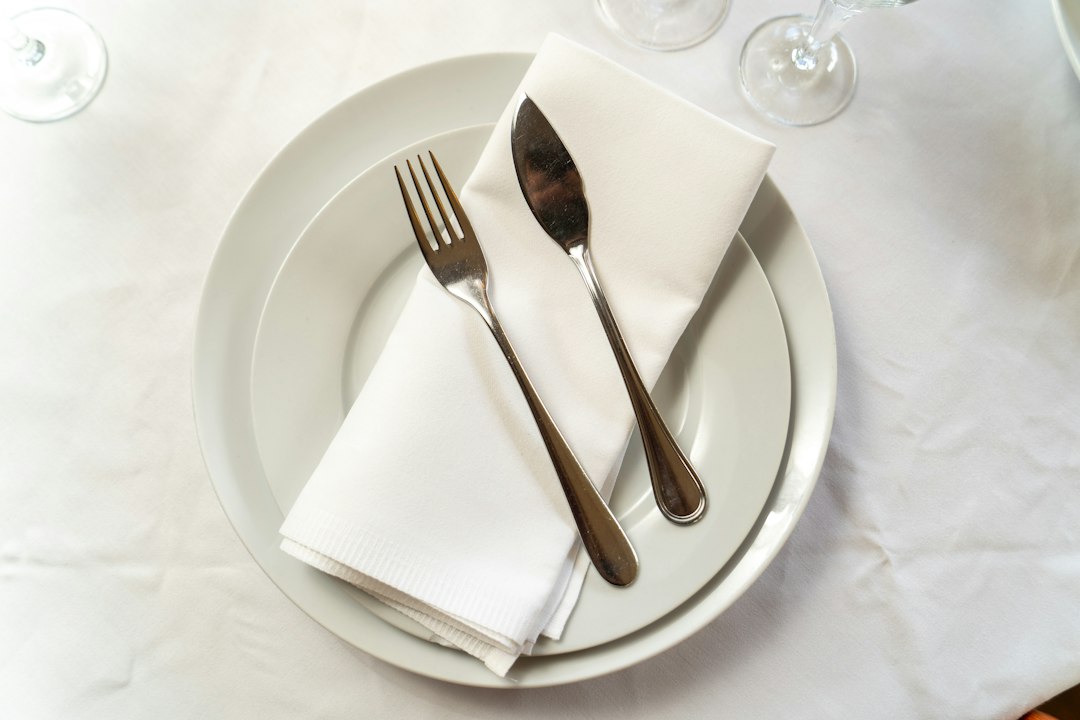
Illustrative photograph: Mika Baumeister on Unsplash.
Editorial note
Kitchen products and manufacturer instructions vary. When a product manual conflicts with general guidance, follow the instructions for your exact model.