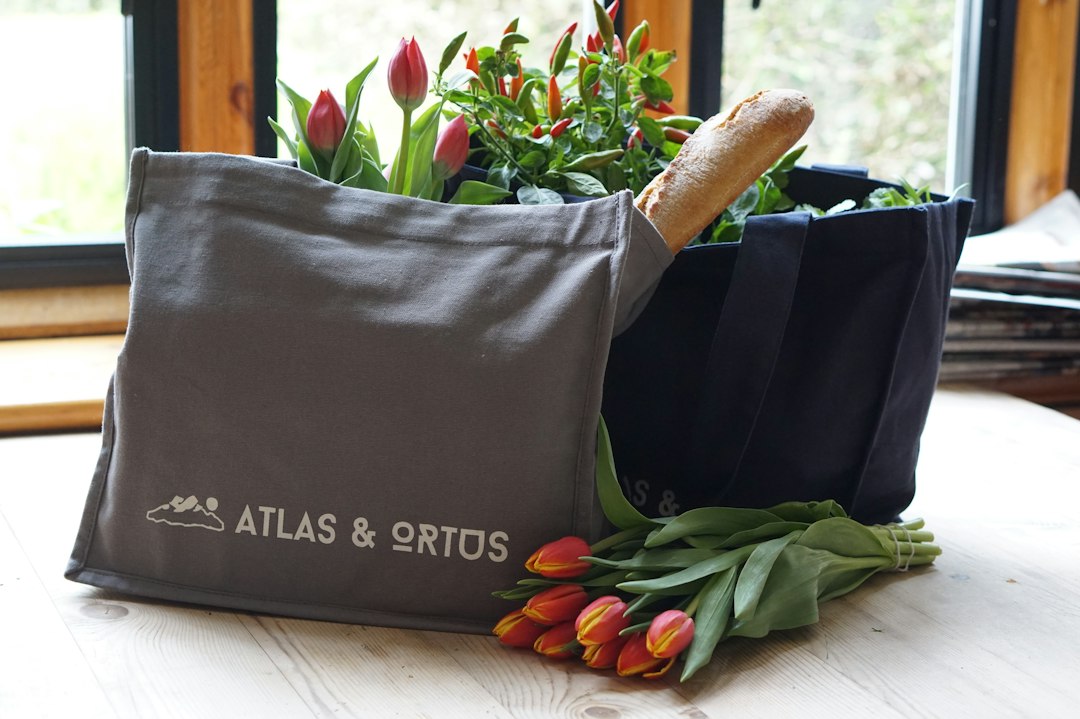
Organize reusable shopping bags by separating clean, dry bags from those needing washing, grouping them by use, and keeping a manageable set near your departure point. Store bags where they can stay dry, and return them to their place after groceries are unpacked.
Gather the bags and check their condition
Collect bags from the kitchen, hallway, car and other storage spots. Work through them on a cleanable surface rather than spreading used bags over a food-preparation area. Empty receipts, crumbs and forgotten items before deciding which bags belong in the active collection.
Inspect handles, seams, linings and zippers. A bag with a torn handle may be unsuitable for heavy groceries even if it still looks tidy when folded. Keep damaged bags out of the ready-to-use group while you decide whether they can be repaired or should be recycled under local guidance.
Read the care labels, especially on insulated bags and bags with rigid inserts. Organization does not replace cleaning. A bag that looks empty but contains leaked food residue belongs in the wash-needed group, not inside a larger clean bag.
Separate clean bags from bags needing attention
Make two clear areas: ready bags that are clean and fully dry, and bags waiting for washing or drying. Use a simple label or distinct container so another household member does not have to inspect each bag before leaving for the shop.
Follow the care instructions for cleaning and let bags dry completely before folding them. Health Canada advises washing reusable grocery bags regularly and after food juices leak into them. Use the method suited to the fabric or lining rather than assuming every bag can go through a hot machine cycle.
Avoid stuffing a damp bag into another one. Moisture hidden between folded layers is easy to overlook. If drying space is limited, deal with a few bags at a time and keep the wash-needed group separate from clean food containers and other ready-to-use kitchen supplies.
Group bags by purpose rather than appearance
Choose useful categories for your household, such as general groceries, raw meat and seafood, produce, insulated transport and non-food errands. Dedicated bags reduce confusion, but they still require cleaning. A bag reserved for meat is not automatically clean after a trip.
Keep food bags separate from bags used for cleaners, dirty sports equipment or other non-food items. Use a washable label, a distinctive color or a marked storage position if several bags look alike. Do not rely on remembering which plain tote carried raw food last week.
For raw meat, follow food-safety guidance on a separate leak-containing barrier as well as the dedicated bag arrangement. Keep the bag system flexible enough for actual shopping. If a category is rarely used, one clearly marked bag may be sufficient rather than an entire second collection.
Keep a working quantity and fold to suit the material
Estimate the number of bags needed for a normal trip plus a small practical reserve. Keep that working set accessible and store occasional oversized bags elsewhere. A crowded basket of twenty totes can be harder to use than a smaller set selected for your usual groceries.
Fold flexible bags loosely enough to retrieve one without pulling out the rest. Follow the bag’s design if it has an integrated pouch. For insulated or structured bags, avoid sharp folds that strain a lining, zip or rigid base. Close fasteners only after the interior is dry.
Test two simple arrangements: upright folded bags in a bin, or a few nested bags inside one designated carrier. Choose the one that lets you see the types and remove a bag easily. If nesting hides dampness or makes the group too heavy, switch to a more open arrangement.
Choose a dry location close to the departure route
Pick a location you pass on the way out, such as a clean hallway shelf or a kitchen cupboard near the door. Keep food bags away from cleaning chemicals and damp storage areas. The American Cleaning Institute recommends a cool, dry home storage area with air circulation.
If you use hooks, check that the hooks and supporting surface can hold the bags without slipping or damaging the handles. Keep the bags clear of the floor and avoid hanging them where they block an exit or catch a door. A shallow basket may be simpler in a rented space.
Do not treat a car boot as the only storage location for the collection. A home return point gives you a chance to inspect and clean bags after use. You may still carry a clean spare for convenience, but it should rejoin the inspection routine rather than remain forgotten indefinitely.
Build a return routine after unpacking groceries
After a trip, empty each bag completely and check for leaks, crumbs and moisture. Put bags needing washing in the designated area immediately. Return clean, dry bags to the ready group rather than leaving them in a pile on the counter.
For a shared household, use a short cue near the storage point: empty, inspect, clean if needed, dry, return. Keep care labels or washing guidance accessible for less familiar bag types. This is more effective than expecting everyone to know how an insulated lining should be treated.
If you repeatedly forget bags, attach the return task to something you already do, such as putting away the shopping list or keys. Prepare the next working set before the next departure. A practical reminder is helpful; repeatedly placing used bags on the dining table is not a clean storage system.
Review overflow without losing useful specialty bags
Reassess the collection when the storage bin no longer closes or new promotional bags arrive. Keep the pieces that are comfortable to carry, easy to clean and suitable for your normal loads. Set aside surplus clean bags for an appropriate reuse or donation option.
Retain specialty bags when they serve a real need, such as a large freezer bag or a sturdy market tote. Give them a separate labeled position so they do not bury the everyday set. Keep their care information with them if another person might use them.
Review the system after several shopping trips. If people keep returning bags to the wrong group, change the labels or locations. Organization should make the clean option obvious. The best arrangement is the one that reliably supplies a suitable, clean, dry bag when you leave home.
Frequently asked questions
Can I fold bags immediately after washing?
Wait until they are fully dry, including seams and insulated linings. Folding can trap moisture between layers.
Should food and cleaning-product bags be separate?
Yes. Keep food bags separate from bags used for cleaners and other non-food items, and make the distinction easy to recognize.
How many bags should I keep accessible?
Keep enough for a normal trip and a practical reserve. Store specialty bags separately if they crowd the everyday group.
Does a dedicated raw-meat bag still need washing?
Yes. Dedicated use helps separation but does not remove contamination. Inspect after each trip and clean appropriately, especially after leaks.
Related KitchenVeyra guides
Sources and further reading
The manufacturer references below apply to the products or models they describe. The organization examples and checklists in this guide are practical suggestions.
- Health Canada: reusable grocery bags and bins
- American Cleaning Institute: cleaning and storing reusable bags
Illustrative photograph: Evie Calder on Unsplash.
Editorial note
Kitchen products and manufacturer instructions vary. When a product manual conflicts with general guidance, follow the instructions for your exact model.