Organize spices by giving every jar a visible label, a consistent position and a storage location away from heat and moisture. Choose either alphabetical order or clearly separated cooking groups, then keep bulk refills in a second zone.
A spice collection becomes difficult to use when three problems overlap: hidden labels, duplicate jars and a shelf that is too deep to inspect. Matching containers alone will not solve those problems. Start with an inventory and test the layout before buying storage products.
The plan below works for a drawer, a narrow cabinet or a small pantry section. It focuses on access and rotation rather than making every jar look identical.
Choose the location first
Look for a cool, dry cupboard or drawer away from direct sunlight and steam. McCormick advises keeping spices away from high-moisture locations such as over the sink or range.
Convenience still matters. A drawer a step from the prep area may work better than a display beside the stove. The practical goal is nearby access without exposing jars to cooking heat.
Do not use a place where water collects or where heavy pans can fall onto jars. Check drawer capacity before planning a dense collection of glass containers.
Gather simple supplies
You need a clear surface, a cloth, removable labels or a marker, paper for the inventory and a measuring tape. Use trays or dividers you already own for the first layout.
Avoid ordering matching jars immediately. You may discover that the existing containers fit well once duplicates and rarely used packets move elsewhere.
Keep original packaging information. If you decant, retain the product name, ingredients, allergen information and relevant date or lot details rather than reducing everything to a decorative label.
Step-by-step organization
1. Empty one spice zone
Remove jars from one shelf or drawer. If spices live in several places, gather them where you can compare labels without mixing them with cleaning products or unrelated food.
Wipe the storage area using the appropriate method and let it dry. Do not return dry ingredients to a damp drawer.
Keep fragile jars away from the counter edge. Use a tray if you need to move the collection while cooking is happening nearby.
2. Make a readable inventory
Write down the spice name, form and whether the container is open. Distinguish ground cumin from cumin seeds and a single spice from a blend.
Group duplicates side by side. Seeing them together makes it easier to decide which jar to use first and which should become a reserve.
Do not combine products just because the front labels look similar. Ingredients, salt content and allergens can differ between blends.
3. Assess condition and usefulness
Inspect packaging for damage, moisture, pests or contamination. Follow the product’s guidance if anything is questionable.
For an intact dry spice, the date and aroma can help you assess expected flavor, but a smell check is not a universal safety test. Do not keep a contaminated jar because it still smells strong.
Identify products you never use. There is little benefit in giving your most convenient space to a specialty ingredient that appears in one recipe every few years.
4. Separate active jars from refills
Choose one everyday container for each spice you use regularly. Put unopened duplicates and bulk refill bags together in a labeled reserve zone.
Keep the older suitable stock accessible so it is used before a new purchase. Do not pour new product over old residue without understanding the contents and cleaning needs.
Add a note to the shopping list when a reserve is opened. This simple transition is easier to maintain than counting every jar each week.
5. Choose a sorting system
Alphabetical order works when several people share the kitchen or when the collection is large. It avoids guessing whether paprika belongs in a baking, grilling or everyday group.
Use-based groups work well for a smaller collection: everyday savory spices, baking flavors and less frequent blends. Keep group names obvious and avoid too many tiny categories.
A hybrid layout can work: everyday jars in a front row, the remaining collection alphabetized behind them. Choose a system you can explain in one sentence.
6. Match labels to viewing angle
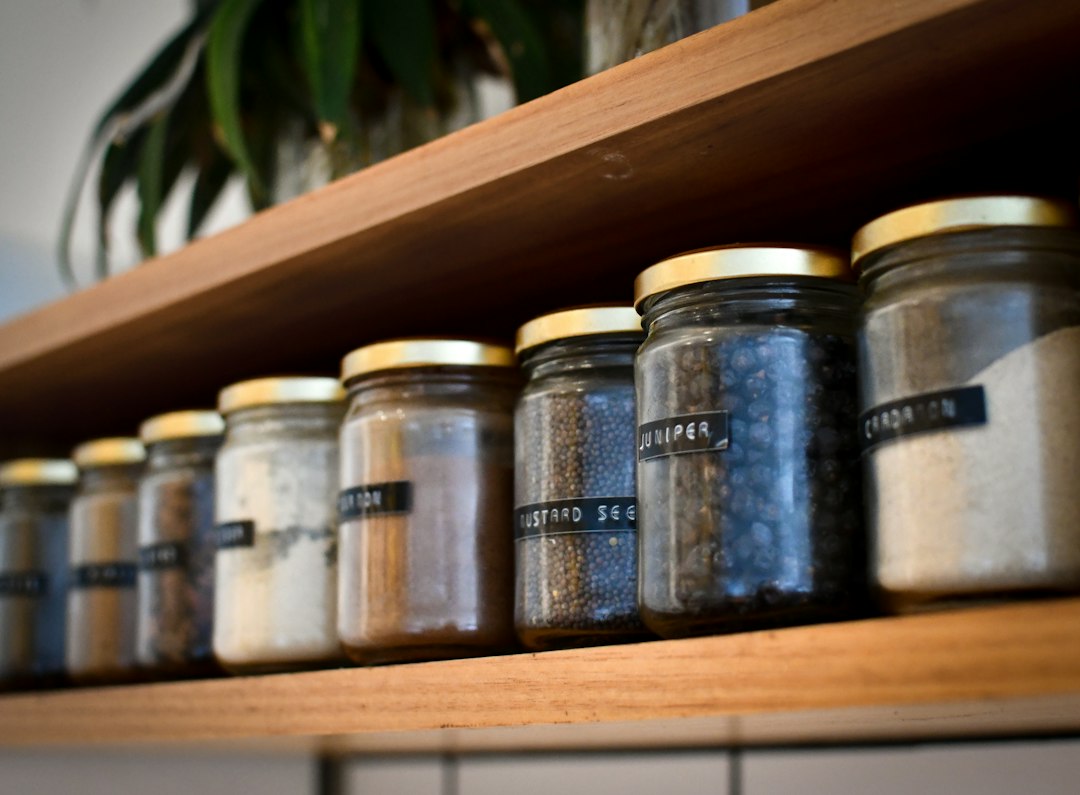
For a drawer viewed from above, label the tops or use a slanted insert that exposes side labels. For a shelf, keep the spice name facing forward.
Include the full useful name. A label that says chili without distinguishing a blend from a specific ground pepper can lead to the wrong ingredient.
Use lettering readable under your actual kitchen lighting. You do not need a label printer; a neat handwritten label is useful if it survives ordinary handling.
7. Test the layout with existing containers
Arrange jars before adding permanent dividers. Open and close the drawer gently, and check that tall lids do not hit the cabinet above.
For a shelf, try a shallow tray, a suitable riser or a turntable that fits without catching the door. Each option has tradeoffs: a riser exposes labels, while a turntable uses a circular footprint.
Avoid stacking small jars so you must remove several to reach one. If a layout looks tidy but makes access slower, change it now.
8. Preserve information when decanting
If matching jars solve a real fit problem, choose clean, fully dry food-storage containers with secure lids. Transfer one product at a time.
Label the jar before moving to the next spice. Retain original ingredient and allergen details, and add the opening or transfer date if useful.
Do not decant an entire collection late at night simply to finish the project. A partially organized shelf with accurate labels is better than several unidentified powders.
9. Give packets and awkward containers a place
Use a small upright bin for packets and a separate area for unusually tall grinders or large containers. Keep names visible without forcing everything into the same jar size.
A packet should close securely after use. If it cannot, use an appropriate secondary container while retaining its information.
Leave enough room that the bin can be lifted without snagging lids. Reserve space is part of a usable system, not wasted storage.
A practical small-drawer example
Imagine twelve frequently used spices, four baking jars and three refill bags. Put the everyday jars in two visible rows, the baking jars in a clearly marked section and the refill bags in a nearby reserve bin.
Keep jar lids labeled for top viewing. Put a short list of reserve products inside the cupboard so a nearly empty jar does not trigger a duplicate purchase.
After a week, notice which jar positions you repeatedly change. Adjust the system around actual cooking habits rather than forcing yourself to preserve the first arrangement.
Maintenance after shopping
Before putting a new jar away, check whether you already have it. Place duplicates in reserve rather than beside the active jar.
Wipe a sticky lid or oily container base before returning it. Do not shake spices directly over steam if that introduces moisture into the container.
Review the collection when planning a grocery order. This is more useful than an elaborate annual cleanout that leaves months of duplicate buying in between.
Troubleshooting the layout
If labels disappear, change the viewing angle or label position. If jars fall when the drawer closes, reduce crowding and use a suitable divider.
If the shelf fills again, inspect refills and rarely used items before buying a larger rack. The active collection may be smaller than the total inventory.
If other household members cannot return jars correctly, simplify the categories. A storage system should not require remembering your personal interpretation of each recipe style.
Use a short inventory instead of a complicated tracker
A simple note can list only the items in reserve and the products you want to use soon. You do not need to log every spoonful.
Review that note before a grocery order, then check the active jars you expect to use in the coming week. This connects storage to actual cooking and reduces duplicate buying.
If the note becomes too long to maintain, simplify it. The jar labels remain the primary identification system; the inventory is only a shopping aid. A useful system should reduce decisions in the kitchen instead of creating a second administrative task.
Frequently asked questions
Is a rack above the stove a good place?
It is convenient, but heat and moisture are disadvantages. Choose a cooler, drier location when possible.
Must I buy matching jars?
No. Visibility and consistent placement matter more than uniform appearance.
Should I combine duplicate jars?
Avoid combining unless you can preserve accurate identity and condition information. Keeping separate stock is often easier.
What belongs on the label?
The useful product name comes first. Preserve ingredients, allergens and relevant date information from the original package.
Alphabetical or by use?
Choose alphabetical order for a large shared collection, or simple use groups for a smaller personal one. Test the system during real cooking.
Related guides
Sources
Illustrative photo: Heather McKean / Unsplash. The photograph illustrates the topic; it is not a step-by-step demonstration.
Editorial note
Kitchen products and manufacturer instructions vary. When a product manual conflicts with general guidance, follow the instructions for your exact model.