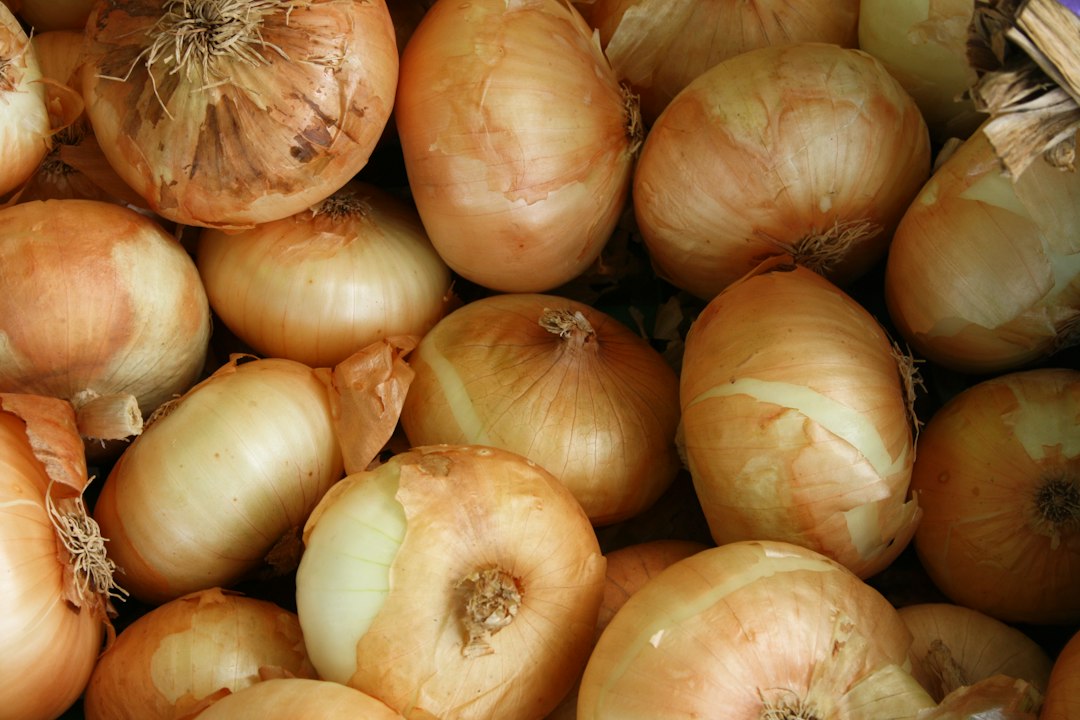
Store whole, dry bulb onions in a cool, dry, dark place with good air movement. Once an onion is peeled or cut, move it to a clean covered container in the refrigerator. The important distinction is the onion’s condition: the open basket that suits an intact dry bulb is not a suitable place for yesterday’s chopped onion.
This guide focuses on ordinary yellow, red, and white bulb onions used in home kitchens. Green onions, commercially prepared products, and particularly moist sweet varieties may need different handling. Follow package directions when a product arrives refrigerated or has a use-by date.
Start by sorting what you actually bought
Put the shopping bag on a clear work surface and separate intact dry bulbs from any peeled or damaged onions. The National Onion Association recommends choosing firm dry bulbs without cuts, bruises, or blemishes. University of Minnesota guidance likewise describes firm, dry onions with papery skins as the starting point for storage.
Do not pour a new bag straight over the old stock. Inspect the bottom of the existing basket first so that an onion hidden underneath does not remain there through several shopping trips. Keep the original packaging long enough to retain product identifiers if a recall or quality question arises.
For a simple first pass, make three groups: intact bulbs for storage, sound onions you intend to use soon, and spoiled onions to discard. Do not keep a rotten onion merely to complete a matching row in a storage container. Wash your hands and clean any surface or container that has become soiled during sorting.
How to store whole onions in a home kitchen
1. Choose the location before choosing the basket
Assess where heat and moisture collect. A cupboard beside the oven, a sunny windowsill, and a damp area under the sink may be convenient, but convenience does not establish suitable conditions. Look for a dry, shaded place with air movement and access for routine checks.
A useful test is whether you can inspect the onions without moving cleaning chemicals or unloading half a cupboard. Keep food away from household cleaners and leaking plumbing. If the kitchen is consistently warm and you have no better food-storage area, buy smaller amounts rather than assuming a large basket will compensate for the room conditions.
2. Use a container that allows ventilation
The National Onion Association advises against enclosing whole dry onions in plastic bags that restrict air movement. A ventilated container gives you a way to keep bulbs together without sealing them into a humid space.
Choose a size that fits the quantity you normally use. A shallow arrangement is easier to inspect than a deep pile hidden behind other groceries. You do not need a specialty onion keeper to make the system work; the practical questions are whether the container is clean, ventilated, and easy to reach.
3. Keep intact bulbs dry
Do not wash a whole batch before putting it away for dry storage. Save preparation washing for the onions you are about to use. Avoid adding a wet cloth or damp liner to a container intended for dry bulbs.
If your existing basket is dirty, empty it and clean it according to its material, then let it dry before returning food. A removable container is easier to inspect and clean than an elaborate arrangement that can only be reached by lifting individual onions through a small opening.
4. Make frequent checks easy
Place the basket so you can view the contents when planning meals. Check the bottom and the area touching the shelf as well as the visible top layer. Remove spoiled bulbs and address moisture or a leaking container nearby.
University of Minnesota’s consumer guide suggests using whole onions within four weeks under suitable storage conditions. That is a planning reference, not a promise for every bag. Variety, condition at purchase, and the actual storage environment all matter. Inspect the food instead of using a calendar to excuse visible deterioration.
What changes after peeling or cutting?
| Onion condition | Storage approach | What to record |
|---|---|---|
| Whole dry bulb with intact skin | Cool, dry, dark, ventilated location | Purchase batch for rotation |
| Whole peeled onion | Refrigerate in a clean covered container | Peeling or opening date |
| Half, sliced, or chopped onion | Refrigerate promptly in a sealed container | Cutting date |
| Store-bought pre-cut onion | Keep refrigerated and follow its label | Use-by date and opening instructions |
Keep the refrigerator at 40°F (about 4°C) or below. FDA guidance emphasizes refrigerating pre-cut produce, while USDA’s consumer advice says not to leave cut or peeled produce at room temperature for more than two hours. Put the portion you are saving away promptly rather than leaving it beside the chopping board throughout dinner and cleanup.
Use a clean container with a lid that actually closes. Give a half onion enough room to fit without forcing the lid against it. If several people cook, label the container with the cutting date so another person does not mistake it for a newly opened batch.
How long should you keep cut onion?
Published consumer guidance differs. The National Onion Association’s how-to page allows up to seven days for properly stored cut onions; University of Minnesota recommends using them within two to three days. For a straightforward household plan, aim to use freshly cut onion within two to three days and follow any shorter package instruction.
A planning date cannot fix poor handling. If a container has been left warm too long, smells spoiled, shows mold, or has an uncertain history, do not simply reset its label. Do not taste food to decide whether questionable storage was safe.
Build a rotation system that matches your cooking
Keep a small “use first” area for the older sound bulbs, and place new stock separately until you have checked what remains. This is an organization method, not a new storage-life rule. It helps you see when a recipe can use what is already in the kitchen.
Before shopping, count the intact bulbs and check for a refrigerated cut portion. Write the remaining amount on your shopping list. If you repeatedly throw away half onions, plan meals around smaller bulbs or buy less at a time rather than keeping an oversized emergency supply.
Keep purchase notes distinct from cutting dates. “Bought Monday” and “cut Monday” describe different events. If you move the onion into another container, transfer its existing date; changing the container does not make the food new.
For labels that retain useful information, see our pantry container labeling guide. For the refrigerator layout, use our guide to separating raw and ready-to-eat foods.
Troubleshoot the storage setup
The bottom onions keep becoming wet
Empty the container and look for the cause rather than adding a fresh layer on top. Check for a spoiled bulb, a damp liner, condensation, or moisture from nearby food. Clean and dry the container and reconsider its location before restocking.
You cannot tell how old the chopped onion is
Do not infer the date from its position on the shelf. Ask the person who prepared it if there is a reliable record. If the history cannot be established, choose a fresh onion. Keep a marker near the storage containers so recording the next batch takes only a moment.
The kitchen is too warm for a large bag
Reduce the amount purchased and choose the coolest suitable dry food-storage area available. Avoid using an unmonitored garage or outbuilding just because it is cooler at one time of day. A smaller, frequently checked supply is easier to manage than food hidden in a place you rarely inspect.
A sweet onion does not keep like the others
The National Onion Association notes that sweet or mild varieties with higher moisture may benefit from refrigeration to extend keeping quality, with low humidity and dryness maintained. Treat the variety and seller’s directions as part of the storage decision rather than assuming every onion belongs in the same basket.
Frequently asked questions
Can I keep half an onion on the counter?
Refrigerate the saved half promptly in a clean sealed container. A cut surface changes the handling requirements. Do not apply the whole dry bulb’s pantry routine to a peeled or cut portion.
Should I peel all the onions after shopping?
Only if you intend to manage them as refrigerated peeled produce. For ordinary dry storage, leave sound bulbs intact and prepare what you need for cooking. Batch preparation creates additional containers and dates to track.
Can I freeze chopped onion instead of wasting it?
The National Onion Association says cut onions can be frozen for later cooking, although thawed texture is less suitable for raw use. Freeze only sound, safely handled food in suitable portions and label it. Freezing is not a way to rescue spoiled or mishandled onion.
Does a sealed jar make whole onions last longer?
Not as a general rule. Whole dry bulbs need air movement; a tightly sealed jar conflicts with that dry-storage approach. Reserve a clean sealed container for the peeled or cut onion that is going into refrigeration.
Food storage references
- National Onion Association: selecting and storing onions
- University of Minnesota: onion selection and storage
- FDA: produce handling and refrigeration
- USDA: cut fruit and vegetable storage
Featured image: Photo by Lars Blankers on Unsplash. Illustrative photograph.
Editorial note
Kitchen products and manufacturer instructions vary. When a product manual conflicts with general guidance, follow the instructions for your exact model.