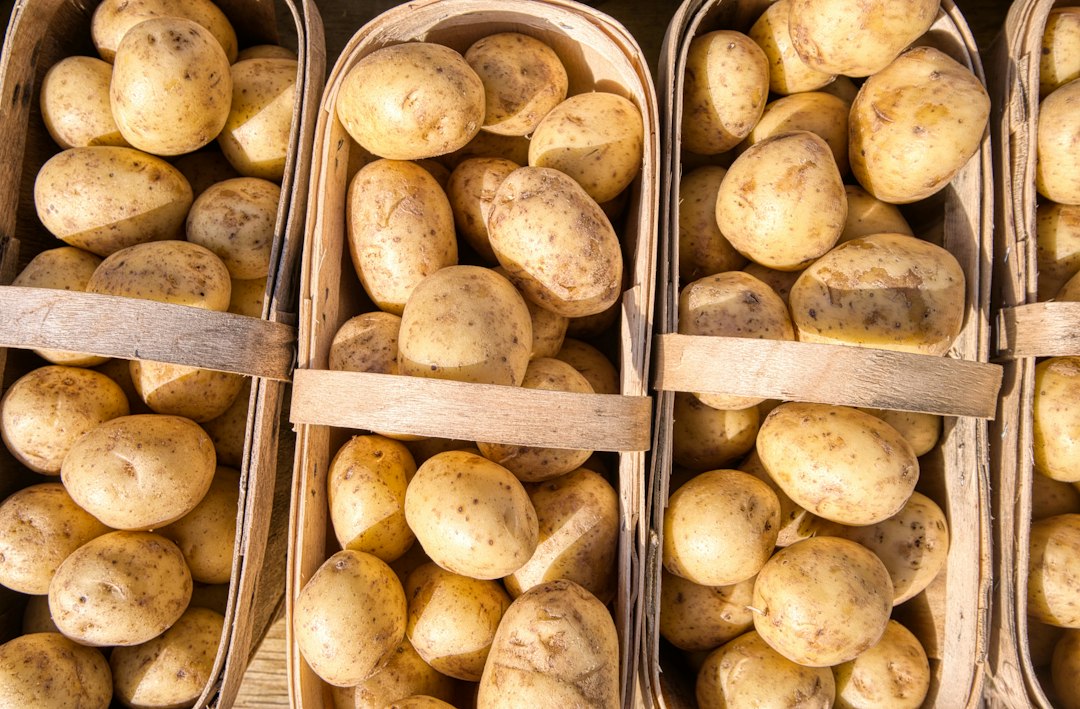
Store whole raw potatoes in a cool, dry, dark place with good ventilation. Keep them out of direct light, inspect the supply regularly, and remove spoiled potatoes promptly. Do not treat storage as a way to make a green, badly sprouted, or rotten potato safe again.
This guide covers ordinary white, yellow, red, and russet potatoes bought for home cooking. Sweet potatoes, peeled potatoes, prepared supermarket products, and cooked leftovers need their own handling rules. Begin by identifying which of these you have before choosing a basket or a refrigerator shelf.
Choose a location that limits light and trapped moisture
A bright counter is convenient for seeing your ingredients, but it is not the storage environment recommended for potatoes. Health Canada advises cool, dry, dark storage to limit conditions associated with increased glycoalkaloids, naturally occurring potato compounds that can be harmful at high levels.
Walk through your actual kitchen rather than choosing a location from a photograph. Note which cupboard is warmed by the oven, where afternoon sun reaches, and whether an area is damp. Keep food away from household chemicals and places that may receive plumbing leaks.
Darkness and ventilation need to work together. An opaque but airtight container can trap moisture. A wide open bowl in bright light solves a different problem while leaving light exposure unchanged. Select a ventilated container in a genuinely shaded storage location, and check that you can reach it easily.
Home conditions vary. If your kitchen has no reliably cool food-storage area, buy a smaller quantity that fits your near-term meal plan. You do not need to recreate commercial storage conditions or invest in equipment just to manage a modest weekly supply.
How to put a fresh bag of potatoes away
1. Inspect the bag before mixing it with older stock
Open the bag on a clear surface and look at individual potatoes, including those at the bottom. University of Minnesota’s consumer guide recommends selecting firm, dry potatoes. Check for wet areas, visible mold, unpleasant decay, extensive damage, or other changes that make a potato unsuitable to keep.
Do not hide questionable potatoes beneath sound ones. Put spoiled food aside for disposal and clean any container that has become wet or dirty. Keep the purchase packaging or a photograph of its product information if you may need to identify the batch later.
2. Keep whole storage potatoes dry
Avoid washing the whole bag before dry storage. Wash the potatoes you are about to prepare, rather than introducing surface moisture to a supply you intend to keep. If a basket needs cleaning, let it dry before adding fresh food.
Remove loose debris without scraping or cutting into the skin. This is a sorting task, not a preparation session. Once you peel or cut a potato, it no longer belongs in the dry whole-potato basket.
3. Arrange them so you can inspect the supply
Use a container that does not bury a small older batch under a large new one. A manageable layer is easier to check and lift than a deep pile. Make sure the container is strong enough for its contents and will not catch or tear when pulled from the shelf.
Keep the older sound potatoes in an identifiable “use first” section or separate small container. Label a purchase batch if it helps you rotate it. A purchase date is an organization aid; it does not certify that an individual potato remains sound.
4. Check the location during ordinary kitchen use
When planning a meal, inspect the bottom and back of the container as well as the top. Look for changes in firmness, wetness, sprouts, or greening. If one potato has decayed, remove it and inspect the potatoes touching it before deciding what remains suitable.
Choose an arrangement that you will actually maintain. A sophisticated bin in a rarely visited storage room can be less useful than a modest supply in an accessible suitable cupboard. Accessibility supports inspection; it does not replace the need for good storage conditions.
How to assess potatoes before cooking
Greening, sprouts, and ordinary dirt are not interchangeable observations. Health Canada advises removing green areas, sprouts, eyes, and damaged portions, and discarding the entire potato in severe cases. If a potato is extensively affected or you cannot confidently distinguish a minor defect from a larger problem, discard it.
Cooking is not a dependable fix for elevated glycoalkaloids. Health Canada’s guidance says ordinary baking, boiling, frying, or microwaving does not significantly lower them. Moving a green potato into a dark cupboard also does not establish that it has become safe.
| What you see | Practical response |
|---|---|
| Firm, sound potato with ordinary surface dirt | Keep in suitable storage; wash before preparation. |
| A small localized green or sprouted area | Consult the safety guidance and remove affected tissue thoroughly; discard if uncertain. |
| Extensive greening or heavy sprouting | Discard rather than try to rescue it through cooking. |
| Mold, wet rot, leaking tissue, or major deterioration | Discard; inspect and clean the storage area. |
| Bitter or burning sensation when eating | Stop eating; do not continue tasting to test the potato. |
The table is a household decision aid, not a laboratory test for toxin concentration. No storage label or photograph can measure glycoalkaloids at home. Be especially cautious about convincing yourself that an extensively changed potato is acceptable just because you want to avoid waste.
If you want more background on the storage changes, Oregon State University Extension explains how light, damage, and storage conditions influence glycoalkaloids. That scientific context supports prevention; it does not create an at-home method for proving a questionable potato safe.
Whole potatoes, peeled potatoes, and leftovers need different plans
For raw potatoes you have already peeled or cut, switch from a dry-storage routine to safe refrigerated handling. Use a clean food container, refrigerate promptly, and follow a reliable preparation-specific method. Do not return cut pieces to a paper bag with whole potatoes or leave them on the counter until the next day.
FDA recommends refrigerating pre-cut produce, and USDA advises against leaving peeled or cut produce at room temperature for more than two hours. A practical approach is to prepare only the amount needed for the meal unless you have planned the next step and suitable refrigeration.
Commercial pre-cut potatoes may carry specific use-by and opening instructions. Keep that information with the product instead of replacing it with a generic whole-potato storage estimate. Cooked potatoes are leftovers; use our refrigerated leftover guide for that separate question.
How much should you buy, and how long should you plan to keep it?
University of Minnesota’s consumer guide gives three to five weeks as a planning range for potatoes in suitable cool, dark, ventilated conditions. That range is not a guarantee for a warm kitchen, an old bag, or a potato already showing deterioration. Start with the actual condition and check the supply while using it.
Try a short shopping experiment: record the bag size, the meals you used it for, and how many potatoes remained before the next trip. If you repeatedly buy another bag while half the previous one remains, a smaller purchase may reduce both clutter and waste.
Keep whole potatoes in a separate identifiable container from onions so each supply can be checked and rotated easily. This is a practical organization choice, not a claim that merely separating two baskets guarantees a particular shelf life. Our small pantry organization guide can help you assign accessible food-storage zones.
Frequently asked questions
Can potatoes stay in the supermarket bag?
Check whether the packaging provides ventilation and protects the contents from light in the intended location. Do not keep a wet or visibly deteriorating bag unchanged. Inspect the potatoes rather than assuming the original package removes the need to check them.
Should potatoes always be kept in the refrigerator?
This guide uses the cool, dark, ventilated approach recommended by the cited consumer storage guidance for whole raw potatoes. Refrigerator suitability can depend on the product and intended preparation. Follow any package directions and avoid treating a cold shelf as a solution for an already green or spoiled potato.
Can I eat a potato after removing sprouts?
Health Canada permits removal of affected areas in limited cases and advises discarding severely affected potatoes. Sprouting is one observation among several. Consider the whole potato’s condition, remove the sprouts and affected tissue as directed, and discard it if deterioration is extensive or the decision is uncertain.
Can washing remove the green color safely?
No. Greening is not simply dirt sitting on the skin. Do not rely on washing, scrubbing, or cooking to make an extensively green potato suitable to eat.
How can I make regular checks easier?
Use a container you can lift safely, keep older batches visible, and check the supply before shopping. Avoid a deep hidden pile. The best routine is one that lets you identify changes while there is still a manageable amount of food to inspect.
Food storage and safety references
- University of Minnesota: selecting and storing potatoes
- Health Canada: glycoalkaloids, greening, sprouts, and storage
- Oregon State University Extension: glycoalkaloids in potato tubers
- FDA: produce handling
- USDA: peeled and cut produce
Featured image: Photo by Eric Prouzet on Unsplash. Illustrative photograph.
Editorial note
Kitchen products and manufacturer instructions vary. When a product manual conflicts with general guidance, follow the instructions for your exact model.