To clean an immersion blender, disconnect its power, detach the blending shaft if the design allows it, and wash the approved food-contact parts. Wipe the motor body without immersing it. Keep fingers clear of the blade, and check separate care instructions for whisk or chopper adapters.
Identify the washable shaft and the motor body
Find the model number and its care instructions before starting. An immersion blender may have a detachable shaft, a fixed shaft, a removable pan guard, a rechargeable battery or several gear adapters. Similar-looking parts can have different water and dishwasher restrictions.
Make a clear distinction between the motor housing, the food-contact blending attachment and any adapter joining an accessory to the motor. KitchenAid’s corded hand-blender guidance, for example, specifically distinguishes washable attachments from motor and adapter components. Use the instructions for your model rather than assuming every part below the handle can be submerged.
Set out mild dish soap, a soft brush and a clean drying area. Keep the blade end visible and controlled throughout the job. Do not place it beneath a sink full of dishes where someone might reach against a concealed cutting edge.
Disconnect power before touching the blade area
Switch the blender off and unplug it. For a cordless product, follow the maker’s procedure for isolating or removing its battery before cleaning. A stopped blade is not enough protection if a button can still be pressed while your hand is near the guard.
Let hot food and the attachment cool enough for safe handling. Keep the electrical body away from the sink while removing the shaft. Hold components by their intended grips, not by the blade guard or an exposed cutting part.
If the shaft detaches, use the specified twist or release method. Do not force a connection or undo screws that are not part of the cleaning procedure. For a fixed-shaft design, follow its stated immersion limit and washing method; do not convert it into a detachable design by dismantling the housing.
Remove food before it dries inside the guard
Scrape or rinse accessible food away using the method allowed for the attachment. Thick soup, mashed vegetables and oily mixtures can collect under the bell-shaped guard. A quick rinse over the outside may leave food on the inner surface above the blade.
Use a soft brush with enough reach to avoid putting fingers through the guard. Work on one visible area at a time, keeping the attachment steady. Do not drag a cloth blindly around the blade or push a knife into the opening to dislodge food.
If residue has dried, use a permitted gentle wash or short soak for the washable attachment only. Do not leave the complete appliance soaking in a bowl. A soak that is safe for a metal blending bell may still be unsuitable for an adapter, shaft connection or motor component.
Wash the shaft and removable pan guard
Wash the approved blending attachment with dish soap and suitable water, cleaning the outside, the accessible underside of the guard and the connection area as directed. Rinse away soap and food, then inspect in good light. Repeat gentle cleaning if a visible patch remains.
If the product has a removable pan guard, detach it only as shown in the instructions. Clean its accessible grooves and let it dry separately. A guard can protect cookware during use, but its contact points may retain food if left assembled after a thick preparation.
Do not try to remove or sharpen a fixed blade assembly during routine washing. If food or odor appears trapped behind an inaccessible seal or bearing, ask the manufacturer for advice. Stronger detergent and repeated immersion are not reliable substitutes for an approved inspection or replacement procedure.
Treat whisk and chopper adapters as separate parts
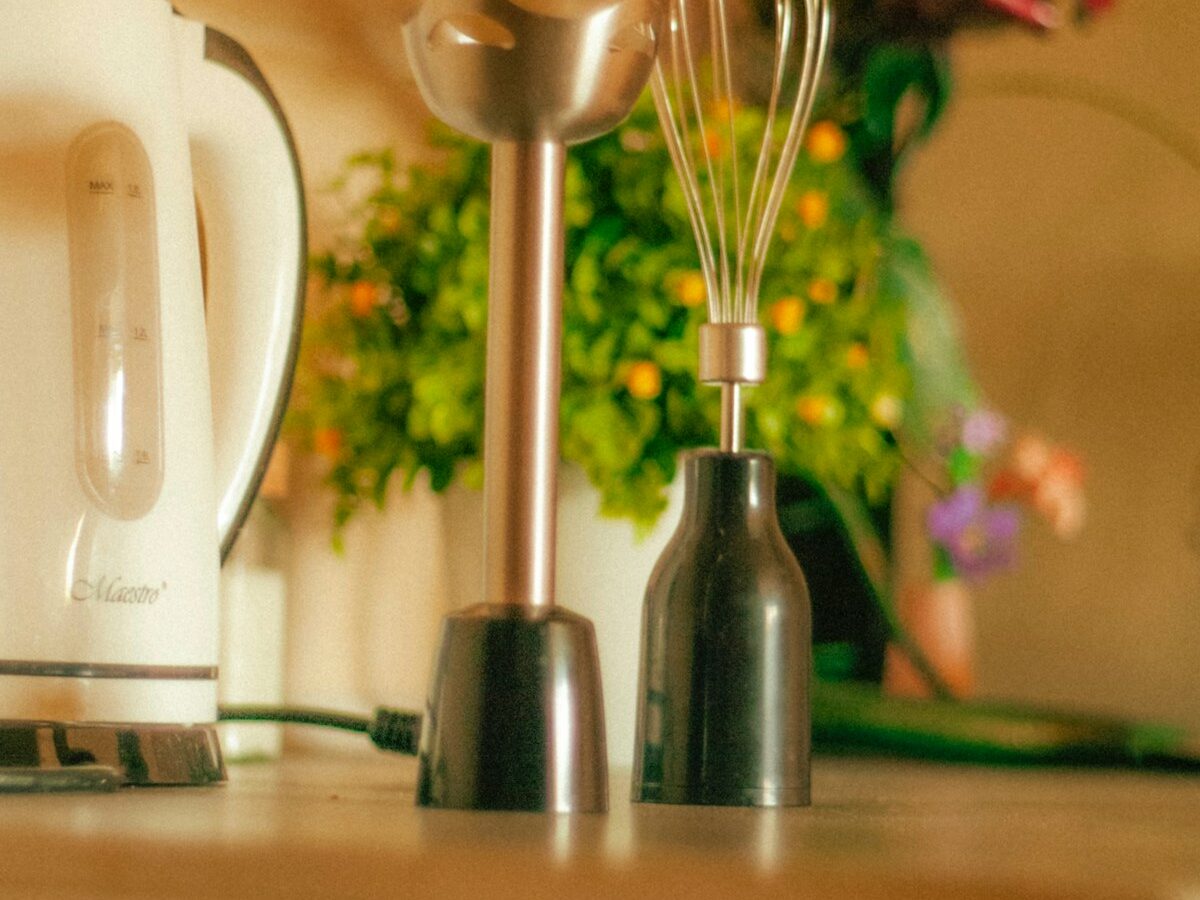
Sort accessory components before washing. A metal whisk, its gearbox adapter, a chopper bowl and the chopper’s lid or drive unit may all have different requirements. A bowl that is dishwasher-safe does not establish that the adapter above it is washable in the same way.
For the KitchenAid corded model described in its care page, adapters are not to be immersed, and certain accessories have their own cleaning steps. Follow your exact manual if it differs. Keep these restrictions visible when another person helps with washing so the whole assembly is not dropped into the sink.
Handle chopper blades by the intended hub and keep their cutting edges away from your hands. Wash only accessible approved surfaces and use protective storage for loose blades. Do not put an unguarded blade into a general drawer with the whisk and charging cable.
Wipe the motor body and check the dishwasher guidance
With power disconnected, wipe the motor housing and controls using a lightly damp cloth as the manual permits. Avoid spraying cleaner into buttons, vents or the shaft connection. Wipe away accessible residue and dry the outside without flooding openings.
Never immerse the motor body, plug or battery. If liquid enters the electrical housing, stop using the appliance and ask the maker how it should be assessed. A dry exterior does not prove that an internal spill has become safe.
Check dishwasher permission for each part separately. Use the specified rack and cycle for approved components and keep small pieces secure. If you cannot confirm compatibility, do not treat a metal finish or a dishwasher-safe bowl as permission for the entire attachment system.
Dry the connection points and store the set safely
Let washable parts drain in a position that releases water from the guard and connection area. Dry accessible surfaces with a clean cloth where appropriate, keeping fingers away from the blade. Allow remaining moisture to evaporate before fitting a protective cover or closing a storage case.
Inspect seals and connection surfaces for damage. Reattach components only when they are clean, dry and correctly aligned. Do not force a shaft that no longer locks normally or continue using a guard that has cracked. Ask about compatible replacement parts rather than improvising a repair.
Store the motor, shaft and matching accessories in a clearly identified group. Keep blades protected and the power supply separate from damp parts. A simple routine after every use—disconnect, separate approved parts, wash, inspect and dry—makes the next meal easier without requiring aggressive periodic cleaning.
Frequently asked questions
Can I immerse the whole hand blender?
No. Keep the motor body and electrical components out of water. Follow the model’s specific washing limits for its shaft and adapters.
Is spinning the blade in soapy water enough?
Some manufacturers permit a powered cleaning method, but do not improvise one. It may not clean every accessible guard or adapter surface, and manual cleaning still requires power disconnection.
Can the whisk adapter go in the dishwasher?
Check the exact model. An adapter may contain a mechanism with different restrictions from the metal whisk itself.
Why does the blender smell after rinsing?
Inspect accessible areas under the guard and around removable parts. Dry them fully. Persistent odor from an inaccessible component needs manufacturer advice, not unapproved dismantling.
Related KitchenVeyra guides
Sources and further reading
The manufacturer references below apply to the products or models they describe. The organization examples and checklists in this guide are practical suggestions.
Illustrative photograph: Niko Caelis on Unsplash.
Editorial note
Kitchen products and manufacturer instructions vary. When a product manual conflicts with general guidance, follow the instructions for your exact model.