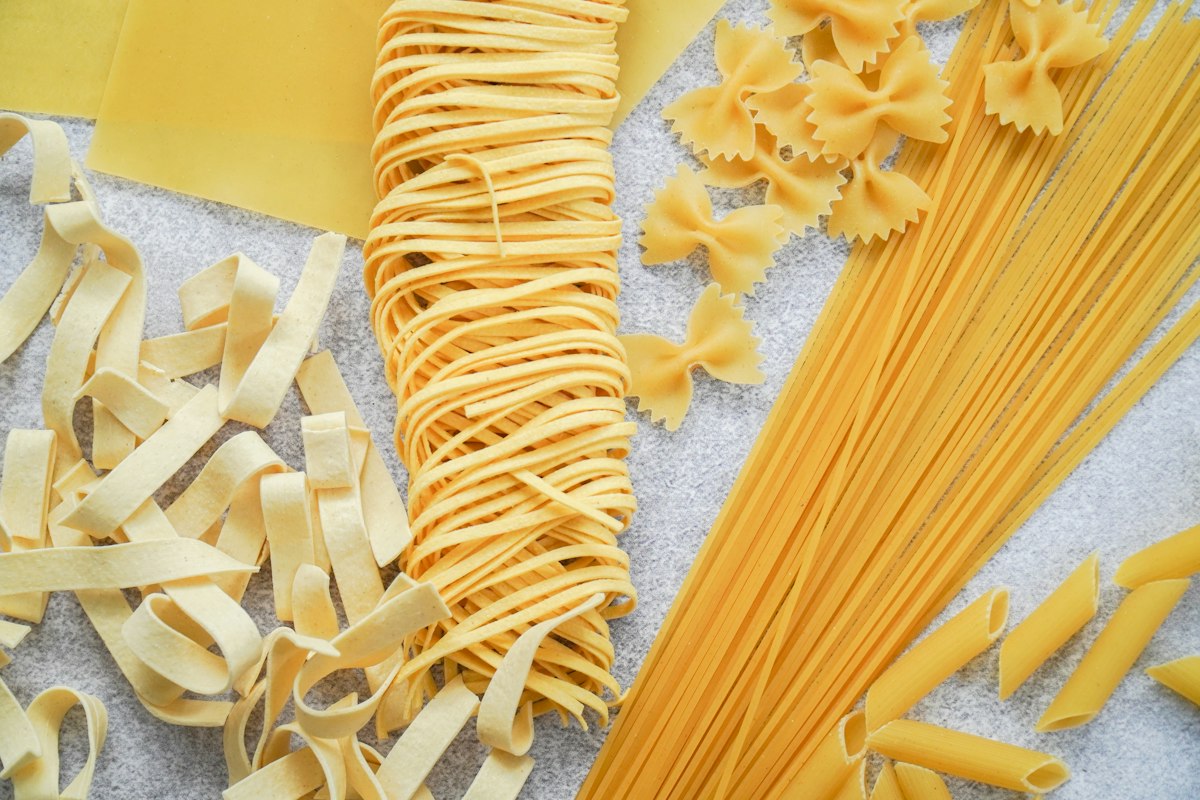
Store dry pasta in a cool, moisture-free cupboard in sound packaging or a clean, dry, tightly closed food container. Keep the shape, ingredients, cooking time and original date information with it. Fresh, refrigerated and cooked pasta need different storage and should not be treated as pantry-dry pasta.
Check whether the pasta is truly shelf-stable and dry
Read the package’s storage instructions first. Ordinary boxed dry pasta, refrigerated fresh pasta, filled pasta and cooked leftovers are different products. A sealed packet does not necessarily mean the food belongs in a cupboard; some packaged pasta is sold chilled for a reason.
Identify ingredients as well as shape. Wheat, egg, whole-grain and legume-based pasta may have different cooking directions and label guidance. Keep gluten-free products and their allergen information recognizable, especially in a shared kitchen.
Inspect the unopened package for damage, moisture or insects before adding it to the pantry. Do not pour a questionable packet into a larger healthy supply. A tidy storage container can hide the original problem and make it harder to identify which batch was affected.
Choose a cool cupboard away from cooking moisture
Look for a dry shelf protected from direct sunlight and heat. Avoid locations beside a steaming kettle or immediately above the hob. Barilla recommends cool, moisture-free pantry or cupboard storage for its dry boxed pasta, including after opening.
Check the area after normal kitchen use. Does steam enter when the dishwasher opens? Does a nearby pipe leak? Does the cupboard become hot when the oven runs? Move the food and address recurring moisture or heat rather than relying on a decorative jar to compensate.
Keep pasta off the floor and away from household chemicals. Use a shelf that is easy to inspect so a damaged packet does not disappear at the back for years. A practical storage location protects the food and helps you remember what is available for dinner.
Choose packaging that suits short and long shapes
A sound original box can remain useful when kept in a suitable dry cupboard, but an opened inner bag may need a better closure. A clean, dry food container can protect the contents and make spills less likely. Check the lid rather than assuming every jar is airtight.
For spaghetti and other long shapes, measure the full length before buying a container. Do not break a shape merely to make a storage jar fit unless you are happy to use it that way. Short pasta may be easier to handle in a wider container with a stable base.
Wash reusable containers when needed and dry them completely, including the lid and seal, before filling. Do not rinse dry pasta before storage. Any washing or preparation should follow the directions for the portion you are about to cook, not the pantry supply.
Preserve the cooking time and ingredient label
Write the pasta name, shape and original date information on the container. Keep the cooking instructions from the exact package. Similar-looking penne from two brands may have different recommended cooking times, and a plain shape name does not preserve ingredient or allergen details.
A clipped package label or a photograph can retain the full information without keeping a large empty box. Include the lot code when possible. If several household members cook, place the essential directions where they can be read without searching through a phone archive.
Avoid mixing different pasta products in one jar. Even shapes with a similar size may cook differently. If you deliberately combine remnants for a recipe, keep them separate from the main labeled supply and expect to manage their preparation individually rather than inventing one guaranteed cooking time.
Rotate open packets before buying more
Place the open supply where you can see it, with unopened reserve packages behind or beside it. Keep a short note of available shapes before shopping. This helps prevent several half-empty boxes accumulating because the same pasta keeps being purchased in different packaging.
Choose a working quantity that matches your household. A large bulk container may be convenient for a frequently cooked shape, while occasional specialty pasta is easier to manage in its original package. Do not buy a large jar before deciding how much pasta you actually use.
Use the older identifiable batch first. Opening or repacking does not reset a best-before date, and storage conditions still matter. Follow the manufacturer’s quality guidance rather than assigning every type of dry pasta the same number of years in a cupboard.
Check for moisture, pests and unusual changes
Look for wet patches, visible mold, insects, webbing or an abnormal odor when opening a container. If pasta has been contaminated or exposed to an unknown spill, do not taste or cook a small portion as a safety test. Discard the affected food when contamination is evident.
For a pantry insect problem, isolate the package and inspect nearby susceptible dry goods. UC IPM recommends removing infested foods, tightly sealing sound supplies and cleaning storage areas. Simply transferring infested pasta into a new jar does not remove the problem.
Clean and dry the shelf and container before adding a fresh supply. Do not spray household insecticide onto pasta or improvise a chemical treatment inside a food jar. If insects continue to appear, obtain appropriate identification and pest-management guidance so the source can be found.
Keep dry pasta storage separate from leftovers
Once pasta is cooked, it is no longer the same pantry product. Cool and refrigerate it promptly using reliable leftovers guidance and suitable containers. Do not return cooked pasta to a dry-storage jar or assume a tightly closed lid makes it shelf-stable.
Use a separate label for cooked portions that includes the preparation date. Follow the instructions for any sauce or other ingredients as well. A dish containing meat, dairy or vegetables should not be assessed solely from the original dry pasta label.
For unopened and opened dry boxed pasta, Barilla advises against refrigerator or freezer storage because of moisture concerns. Follow the guidance for your product instead of putting every pasta packet into cold storage by habit. A simple dry pantry arrangement is often easier to manage for ordinary shelf-stable pasta.
Frequently asked questions
Does dry pasta need refrigeration after opening?
Usually not for ordinary shelf-stable dry pasta. Follow the package instructions; Barilla recommends cool, moisture-free cupboard storage for its dry boxed pasta.
Can I mix leftover pasta shapes in one container?
Keep products separate when possible so cooking times, ingredients and batches remain clear. A mixed jar can make preparation and allergen identification difficult.
Should pasta be rinsed before storage?
No. Keep the dry supply dry. Follow preparation instructions for the portion you will cook.
Can cooked pasta stay in an airtight pantry jar?
No. Airtight storage does not make cooked pasta shelf-stable. Use appropriate refrigerated or frozen leftovers storage.
Related KitchenVeyra guides
Sources and further reading
The manufacturer references below apply to the products or models they describe. The organization examples and checklists in this guide are practical suggestions.
Illustrative photograph: Karolina Kołodziejczak on Unsplash.
Editorial note
Kitchen products and manufacturer instructions vary. When a product manual conflicts with general guidance, follow the instructions for your exact model.